
Lifestyle
‘The Death of The M&S Cafe Will Hit Me (And My Nan) Hard’
‘We’d always end up there because she’s 93, paying, and turns her hearing aid off if I complain’
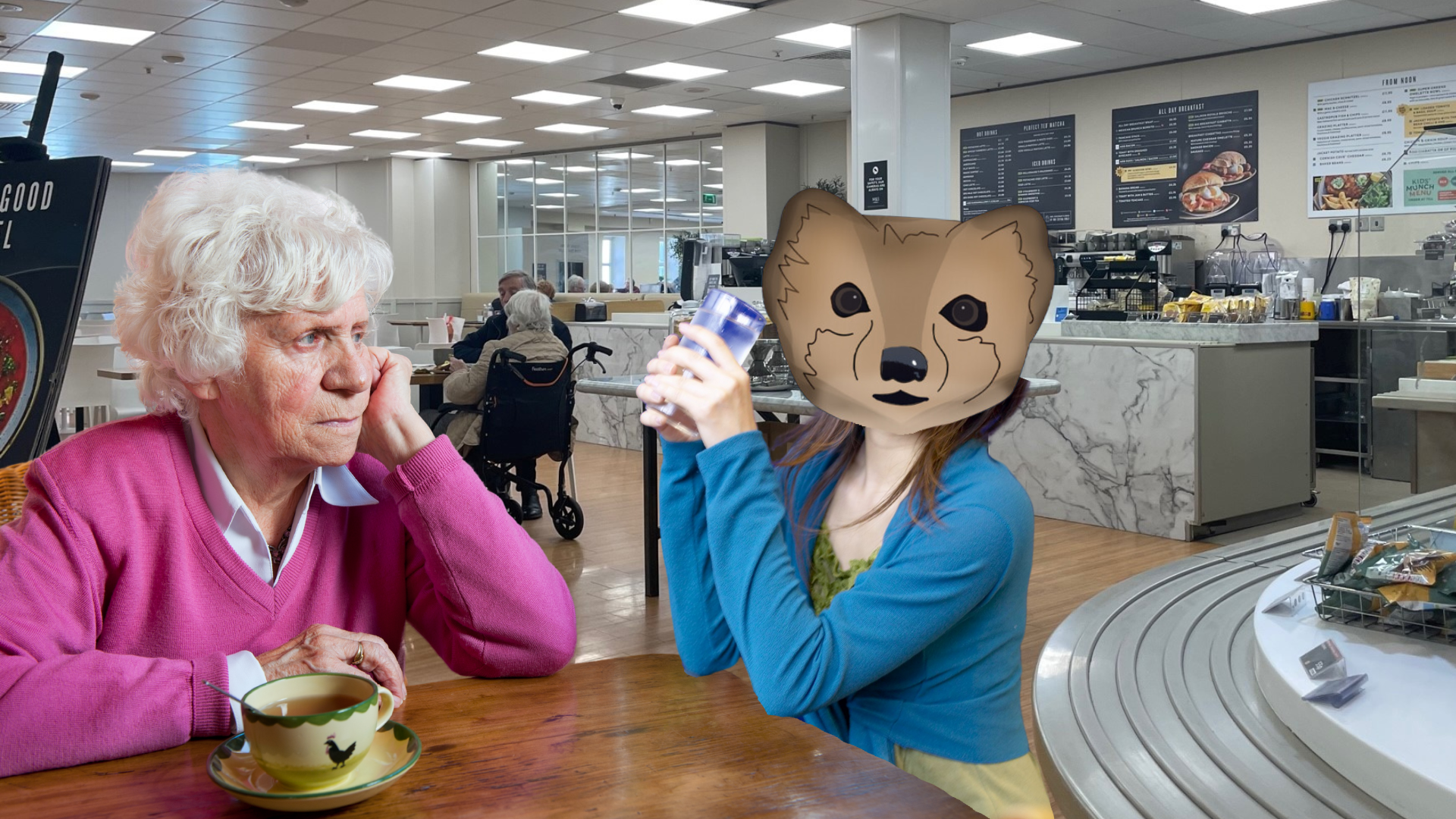
I used to dread asking my Nan where she wanted to go for lunch, because I always knew the answer, ‘the M&S café.’
‘Are you sure?’ I’d ask, barely masking my disappointment.
‘Yes.’ She’d reply, without a beat.
And so that’s where we’d end up because she’s 93 and paying and turns her hearing aid off if I complain.
I don’t have an actual problem with the M&S café; I just prefer places that remind me less of my old high school canteen. Every time we go and I pick up a wooden tray from the end of the line, I get flashbacks to a time when I was 15, emptying my lunch scraps into the bin, then watched in horror as my Tupperware box tumbled in too. Obviously, bin dipping to retrieve it was social suicide, and I was already on thin ice in that regard with my shapeless trousers and upper-lip hair, so I decided to throw the tray in too. In in my self-conscious haste, I hadn’t realised I’d be left holding my Tupperware lid. Instead of abandoning that as well, I decided to try stuffing the 83cm piece of plastic into my blazer pocket as casually as possible, desperately hoping the table nearby were laughing and pointing at something on the wall behind me rather than my red-faced misfortune. It made it worse that it was the staff table.
I’d blame this childhood trauma on my indifference to the M&S café, but really I’m just a snob. I always judged it as something ‘less than’ a café. Not as highbrow as the Tea Junction but not as salt of the Earth as The Caff. Being pegged to a shop put it in a hybrid grey area that made it feel cheap. An odd sensation seeing as M&S is clearly middle class. But I was wrong. The only thing cheap about the café was its offerings, all of which were tasty and good quality. And just because it didn’t fit into the moulds of other types of café, didn’t mean it didn’t have its own canteeny allure.
It was always welcoming. And accessible. A quiet oasis in the heart of a storm of fast-paced shoppers. And it was always busy when I went with Nan. A nice mixture of bustle and calm. It catered to the elderly, held space for prams, was near to public toilets, including a disabled loo and baby-changing unit, and close to a car park with accessible entrances and exits. It was also the place I had lots of lovely moments with Nan. And now, we’re losing it. Along with its bookworm cousin, the Waterstones café. (Another regular haunt for mine and Nan’s regular ‘who’s died lately’ meet ups).
We’re losing it to make way for a ‘major M&S revamp’. The clothing, beauty, and homeware offerings will all be expanded, and there’ll be a 50% increase in the size of the Foodhall. It’ll make way for a larger bakery, and a brand-new hot chicken counter.
It’s doing so, the chain says, because it wants to offer customers a ‘fresh and modern shopping experience’.
But do we really need more ‘fresh and modern’ shopping experiences? What about good, old fashioned cups of tea and a slice of carrot cake experiences? The more I look around, the more I see community spaces being erased, either crippled by financial strain, or elbowed out in a bid to get people to buy MORE, MORE, MORE. Why would you want a cup of tea with a friend when you can get 2 FOR 1 ROTISSERIE CHICKENS AT THE HOT NEW HOT CHICKEN COUNTER?!
We’re a nation of tea drinkers. We NEED these cafes. We’re also a nation struggling with mental health. Which is also why we need these cafes. In a digital world, one in which social media is anything but social, and a world in which piles of waste – food, clothing, beauty, tech, toys – are making new homes in landfills across the world every single day, massively contributing to climate change, do we really need more shopping experiences? Having the means to buy doesn’t mean we have to buy. When will enough finally be enough?
In days of old, our ancestors would sit together around fires, swapping stories. When the radio came along, families gathered to listen. With TV, people gathered to watch. In all cases, it was a communal sharing of experiences that bonded people. Then social media came along and made us more individualistic and simultaneously more tribal than ever before. Our community has shifted to inside a screen, which we stare at, alone, even when in the company of others. Unlimited choice paired with multiple devices pushes us into separate rooms. Cafes are one of our few daytime public spaces where anyone and everyone can come together. Whether that be to share stories with a friend, or to simply sit with homework and be around the buzz you only get from being in the company of flesh and blood as opposed to cold hard steel.
The best conversations happen over a cup of tea, it’s good for the soul. And doing so in public reinstates a sense of real community, while making more of an impact on people’s health than might be realised. Cafes are a reliable and gentle escape, literally for some, from the walls of your house and the confines of your office.
One could argue that a good thing about these cafes closing is that it can drive business to local set ups instead of big corporations, which is great. But it still doesn’t take away from the fact that as we fall into the trap of believing the one big story being told to us all – that we need to buy more and more stuff to make us feel good – we’re getting fewer and fewer options to access what actually does make us feel good. And that’s having a cup of tea with Nan in an M&S café.


