
Community
Manx was Once Declared Extinct…Here’s Why It Isn’t And What Comes Next
Dismissed as unfit for modern life, Manx fought back the only way the Isle of Man knows how – three legs at once
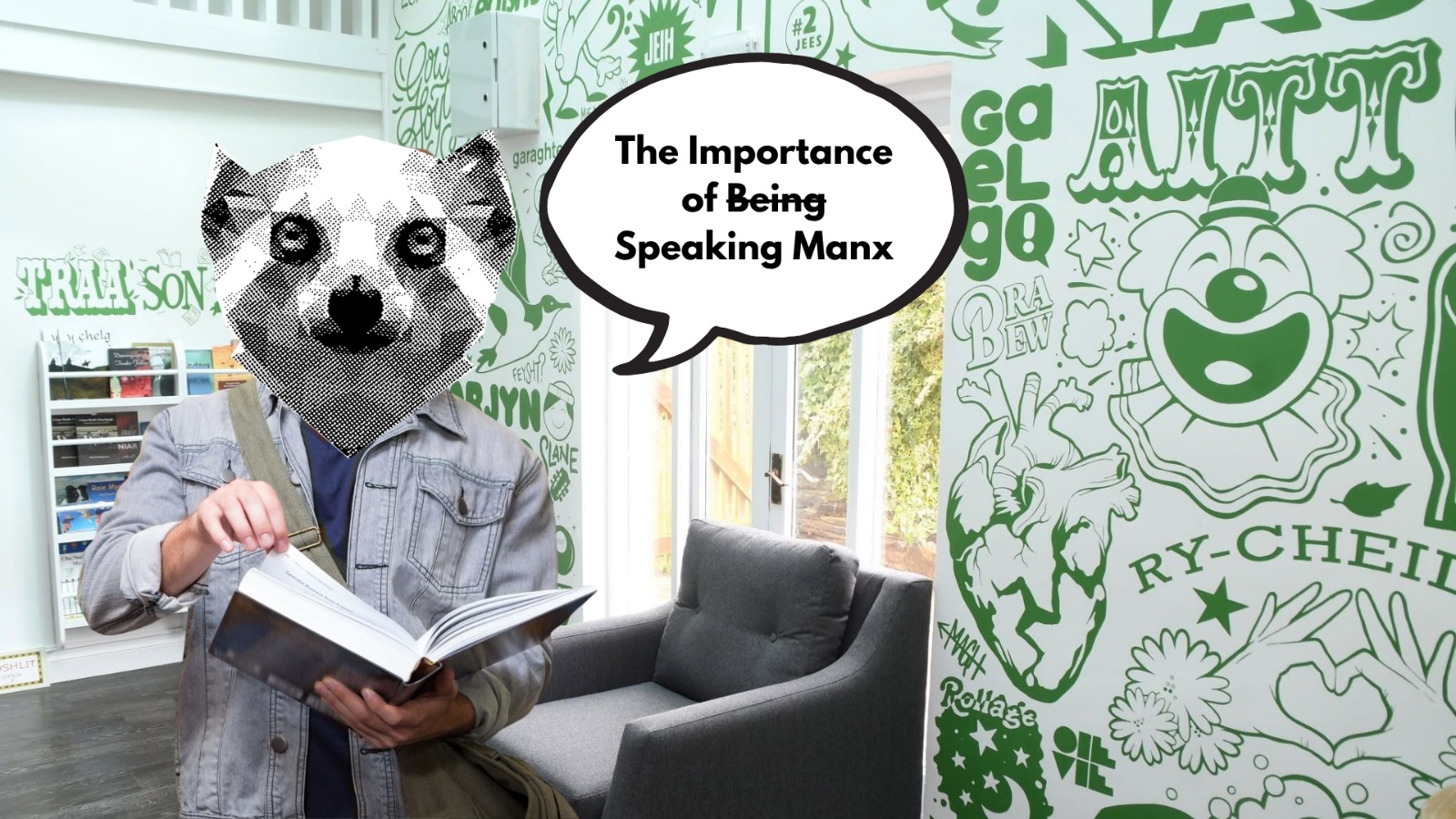
Thank goodness for language. I’d be screwed without it. How would I communicate to people that I don’t want to speak to them without language? I’d have to grunt and throw rocks. Without language, this very conversation between you and I, dear reader, would be impossible. You’d just be looking at, well, nothing.
Thanks to colonialism and being born English, naturally I have grown up being fluent in English, awkward body language, and nothing else. I have tried time and again to learn French on Duolingo but when that soulless staring owl robbed me of my 363-day streak I accepted that my French will progress no further than ‘Combien de temps as-tu perdu à traduire cette phrase’.
Translation: ‘My pencil case is green. Yes, it is good.’ Luckily, the continuation of the French language doesn’t rest on my Duolingo motivation as French is not at risk of becoming extinct. But lots of other languages are.
There are currently more than 7000 different languages spoken worldwide and, according to UNESCO, 40% of them are endangered. On average, a language disappears every two weeks. Every TWO WEEKS. Imagine. By the time you’ve got back from your half-board trip to Malaga, someone’s native tongue has vanished. All that’s left is a whisper in the wind of a language never to be spoken again. Among those are Eyak (was spoken in Alaska), Plains Apache (Oklahoma, US), and my personal favourite, Nüshu script, a code that was used by women in the Hunan province of southern China to speak freely among their own sex as a middle finger to the patriarchy. All gone.
Some might think losing a language isn’t a big deal. ‘It’s breaking down barriers!’ You exclaim in the universal language of joy. ‘It’s making it easier to have global chin wags. Yay! No longer will I have to worry about looking indecent while asking for a hot dog using hand and mouth gestures in Germany because we’ll all talk the same!’ But the loss of a language is the loss of so much more than words. It’s the loss of culture and heritage. It’s the loss of identity. Languages don’t just change words; they allow for different interpretations of the world around us. Like looking into a global kaleidoscope bursting with colour. And each time we lose a language, things become a little more dull.
In 2025, almost half the world’s population’s mother tongue is one of just 10 languages: Chinese, Spanish, English, Arabic, Hindi, Bengali, Portuguese, Russian, Japanese, and Lahnda (Western Punjabi). The keen-eyed among you have probably spotted Manx is not in that top ten.
Manx was deemed formally extinct by UNESCO back in 2009. It all started going south, as it so often does, when the English got involved. Doing their usual 19th century stint of, ‘Hey. It looks peaceful over there in that place that has absolutely nothing to do with us. THOSE SAVAGES. LET’S GO BURN THEIR CULTURE TO THE GROUND (BUT NOT BEFORE WE TAKE A BUNCH OF STUFF) AND SHOW THEM THEY HAVE TO DO THINGS OUR WAY’.
Once the British education system was introduced in the island, the demise of the Manx language began and it wasn’t long before our native language was seen as unfit for modern life, and discouraged in schools and homes. Then, in 1974, the last native Manx speaker – Ned Maddrell from Cregneash (of Waking Ned fame) – passed away with linguists believing he’d taken our mother tongue to the grave with him. But the Isle of Man has three legs and used them to kick and scream Manx back out of extinction.
Thanks to organisations like Culture Vannin and the Bunscoil Ghaelgagh, Manx is no longer dead. Hurray! IT’S ALIVE! But wait. Put the champagne down. Okay, take a swig then put it down. We’re not off the hook yet. The language is still endangered. Culture Vannin is breathing life into our mother tongue but needs your help with the CPR until Manx is fully revived.
The organisation has created a new initiative called ‘Treisht 26’ (meaning trust, confidence, or hope) aiming to make Manx more sustainable and accessible via the creative souls among you. The organisation is offering £500 to up to 30 creative projects that celebrate and promote the Manx language. (Details below).
You don’t need to be fluent in Manx to apply, all levels are welcome. And the bonus is that this initiative also forms part of preparations for the 2026 ‘Year of the Manx Language’ – a year-long cultural celebration organised by Jeebin, the Manx Language Network.
We’re lucky to have people like this fighting for our native language but, as the free falling number of languages across the world show, not everyone is as fortunate. It’s vital to keep Manx alive not just to hold onto our heritage and identity but to benefit the world at large with our place in it. Different languages make the world more interesting and help us grow. They encourage and teach respect, tolerance, curiosity, and empathy. Traits found wanting in the current climate.
Without different languages, we creep ever closer to a world of gentrification. You could think the closer we all move to being the same, the more accessible things will become. But the line between this, laziness, and individualism is a thin one. Without the richness of diversity we become human Weetabix with no milk. Bland, uninteresting and uninterested, less special, less intelligent, less everything. The more cultures that disintegrate, and the more alike we become, the easier it is for us to be organised by those with lots of power and bad intentions. But the real power lies in those few who know the worth of their heritage and are willing to persevere in keeping it alive rather than letting it become lost to history. You are the protective knights of a language. What a privilege that is. All you have to do is Loayr magh.
More information on how to get involved in Teeisht26 can be found here.


50 Years, Three Generations And Thousands of Windows

Josh Secures £300k Backing For Gaming Venture

Review: ‘Easily Tom Holland’s Best Outing As Spider-Man’

New Hotel Plan for Peel
