Black Friday: Just a bit of fun or ‘everything that’s wrong with consumerism’?

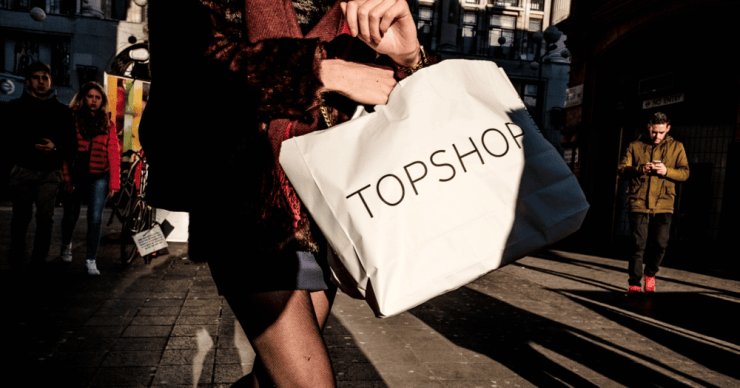
I swear, growing up, Black Friday was never a thing… The Boxing Day Sales were the main shopping event of the year, with the most committed among us heading down to Marks & Spencer and Next at 6am on 26th December to grab a bargain (or if you’re my particularly organised Auntie, to buy all your Christmas presents for the following year).These days, Black Friday is EVERYWHERE, and it doesn’t stop there: Black Friday, Cyber week, end of season sales, new season sales, mid-season sales… There’s a new sale or another huge shopping event every few weeks, and you literally can’t escape it! This week I’ve received a handful of emails every day from this shop or that retailer informing me of their special, one of a kind, for-one-week-only, ‘you don’t want to miss this’ deals and discounts.But it’s just a bit of fun, right? An opportunity to buy gifts for loved ones at affordable prices… While it might seem innocent, if a little over the top, Black Friday has gained a reputation for itself as “the official holiday of materialism”, “everything that’s wrong with consumerism” and [gasp]… RUINING CHRISTMAS??!! 🙀🙀🙀🙀 Black Friday shoppers endure “The Crush” (image: CNN)
Where did this madness start?
The rise of the Black Friday and Cyber Week sales in recent years has come about as a result of changes in our culture which have largely been driven by technology and “fast consumerism”.Gone are the days when we would wait weeks for an item we want to buy to be delivered to our nearest store, or when shopping on Strand Street was, itself, a social occasion (basically every Saturday of my teenage life). We can’t comprehend that our grandparents were often unable to buy food items we would consider staples, simply because they weren’t in stock that week. We can barely remember a time when we would arrive early to an appointment and simply look around the room instead of picking up our phones so as not to look like a loner.This is partly a result of the rise of the internet and the smartphone, which keep us constantly entertained and have made almost everything we can imagine instantly available to us. We’ve become accustomed to having everything we could possibly want at the click of a button. What do we want? Excessive choice. When do we want it? NOW. (image: Huffpost)And alongside the rise of technology and our ever-increasing demand for choice, the high street has entered a sad decline. Every few months another major high street retailer seems to go out of business. Meanwhile, many of the ones that survive simply can’t afford to hold stock anymore, meaning that many retailers rely on frequent sales simply to stay open. This in itself has added to the rise of fast consumerism and “fast fashion”, as new styles arrive every five minutes and with them, new deals. Zara delivers new styles to its stores twice a week, while H&M and Forever 21 now get shipments of new styles every single day.
 Black Friday in London (image: Evening Standard)
Is fast consumerism out of control?
What many people may not realise is that fast consumerism, and in particular fast fashion, is seriously damaging the environment. Many people are aware that plastic packaging, the majority of which is not recyclable, often ends up in landfill and in our oceans, harming wildlife and threatening entire ecosystems (we’ve all seen the horrifying photos). But what most people don’t realise is that the fashion industry is actually the second most polluting industry in the world.In a recent BBC documentary entitled Fashion’s Dirty Secrets, BBC journalist and Strictly Come Dancing star Stacey Dooley highlighted some of the huge environmental problems the fashion industry is creating. On the one hand, manufacturing garments uses a huge amount of water – according to the documentary, it can take over 15,000 litres of water to grow the cotton to make just one pair of jeans. The fashion industry is also responsible for releasing massive amounts of chemical waste into the environment, particularly in developing countries like Indonesia, where many major retailers source their stock. River pollution in Indonesia caused by the fashion industry (image: BBC)Fast consumerism and the constant need to keep up (pun intended) with the latest trends is also impacting our mental health. Social media is constantly reminding us of what we don’t have and causing us to compare ourselves with other people. This can lead us to place too much value on material things like clothes. As we scroll through Instagram in envy of our friends’ latest purchases, it’s easy to feel ‘less than’ or ‘not enough’ without that fancy new iPhone or that designer bag.Some have gone as far as to argue that the rise of consumerism – as exemplified by Black Friday – is actually leading to a decline in the ‘holiday spirit’, as people become frustrated with retailers using the season to try and sell products.Most importantly, it is now all too easy to become so distracted by the latest trends and ‘must have’ items that we forget to be grateful for what we do have – like our beautiful green island and our loved ones.
There must be another way?!
There is! Here are a few ways that you can make your holiday season more mindful and less damaging to the environment:
- Buy your next item of clothing second hand instead of buying a brand new, one-off piece that you’ll be binning come spring. eBay is full of gems, as are the charity shops (where it’s Black Friday every day!). You could even host a clothes swap with your friends. After Christmas is the perfect time as everyone will be clearing out and getting rid of things.
- Instead of buying your friends and family stockings full of novelty presents they’ll use once then throw away, why get them things they can enjoy for a long time, like a photo collage, a book they’ll love or a magazine subscription.
- Even better, get creative and make your Christmas presents! There are a million ideas online for DIY homemade gifts – like hand painted crockery or chunky, hand-knitted, cosy blankets.
- Did you know wrapping paper is not recyclable? Why not try wrapping your Christmas presents in brown paper and getting creative to make them look festive instead of splashing out on fancy seasonal paper? It’s pretty, it’s green, and it’s cheap!

- And if you’ve already done all your shopping and wrapping (kudos to you for being super organised), why not just try being a little more mindful of what matters this Christmas. Spend more time with loved ones or being creative, and less time scrolling through Instagram looking at clothes you’ll throw out in six months.
Remember what it’s all about!var bannersnack_embed = {“hash”:”bc9e1le8h”,”width”:672,”height”:280,”t”:1539344821,”userId”:38193901,”responsive”:true,”type”:”html5″};//cdn.bannersnack.com/iframe/embed.js



You must be logged in to post a comment.