
Collaboration
Manx Wildlife Trust: Stop, Collaborate and Listen
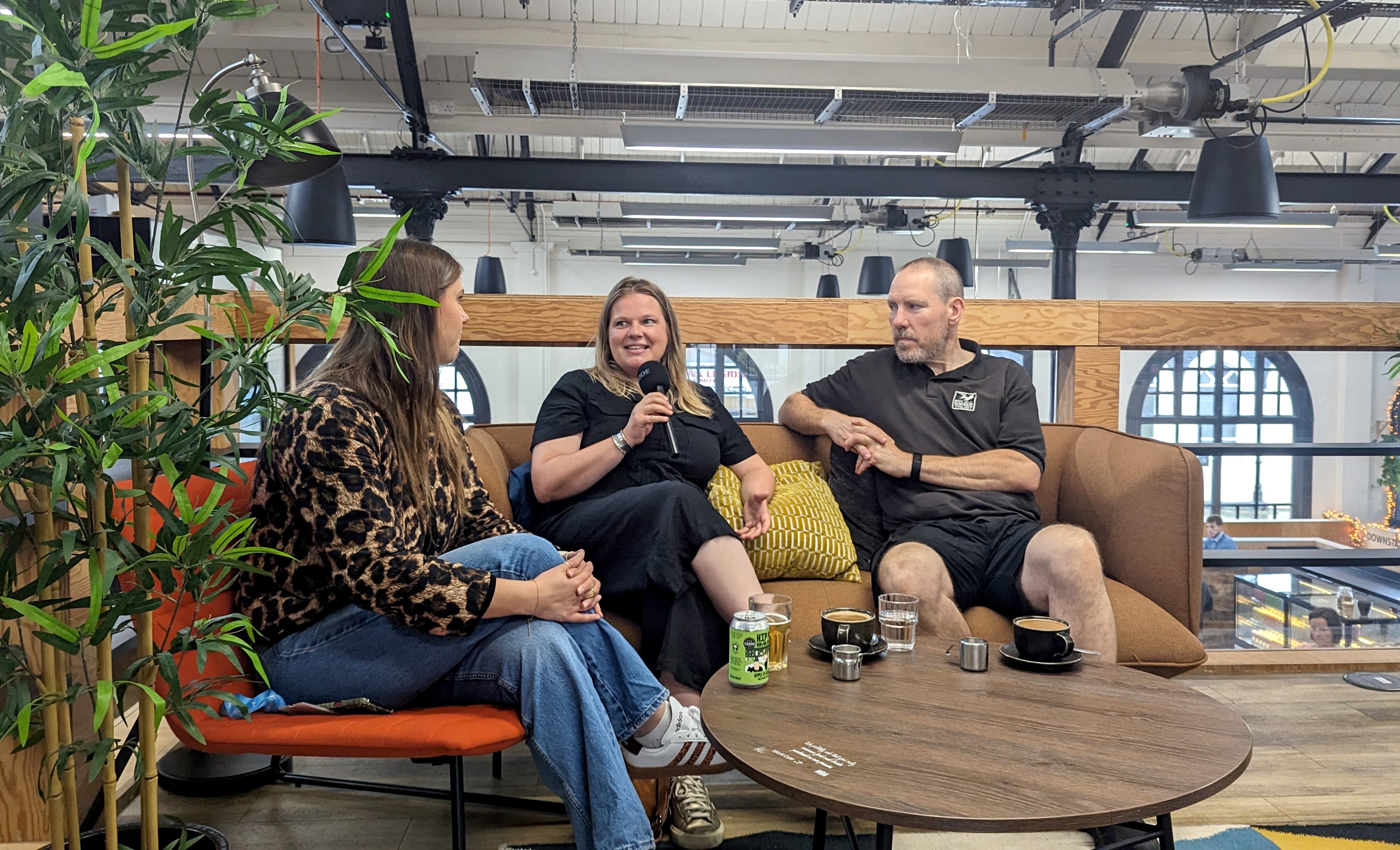
Stop, Collaborate and Listen should be Lucy and Graham’s theme song, because they live by those words to the fullest. ‘Who are Lucy and Graham?’ I hear you ask. They are stalwarts of Manx Wildlife Trust (MWT). NOT THE WILDLIFE PARK. The two are different. Which makes sense now as to why they didn’t bring a gibbon along to the interview. I tried to hide my disappointment.
Lucy Chapman is the Team Wilder Co-ordinator at MWT and Graham Makepeace-Warne is Head of Engagement. Both are instantly likeable people, oozing passion for their work.
‘Yeah, we’re not part of the Wildlife Park,’ Lucy tells me, laughing. ‘We do collaborate with them though. The biggest misconception is that we’re part of government, we’re not. Our income is through donations, grants, and corporate sponsorship. But again, we do collaborate with government and businesses.’
Collaborate is the key word here. Manx Wildlife Trust is an expert at collaborating with a multitude of people in the hope of making the island a better place for everyone. How lovely is that? Rhetorical question. Very lovely is the answer. I hope you’re grateful.
The charity is supporting Media Isle of Man with Gef’s 30 Under 30 this year – an annual campaign celebrating the brilliant work being done by talented young people on the island – and is the official partner of the Collaboration Category.
‘It felt like such a vibrant, positive experience and a celebration of the young talent on our island’, Lucy tells me when I ask how she found being involved with Gef’s 30 Under 30. ‘It felt like a really hopeful event. There’s a lot of bad news at the moment both for nature and people and it was just a moment to stop and reflect on what’s happening well. And the party was incredible.’
‘It was fantastic’, Graham says, adding to Gef’s steadily inflating ego. ‘I don’t recall there ever being anything like it when I was starting out in my career, and it was a real treat to be able to talk to the young people who are all so focussed on what they want to do. That kind of drive is going to bring some great success to the island in coming years. And the category Collaboration fits the way we do things really well. We can’t just focus on the habitats and the wildlife and expect things to work, we’ve got to collaborate with people.’
Sustainability is a huge part of the work being done by MWT, and something that can often provoke negative responses. Lucy, who did a Masters in Sustainability and Behaviour Change after her future genius 4-year-old expressed concern about climate change, believes this attitude is starting to change, and her role is to help mobilise people to take action.
‘We’re at a good tipping point. There’s a real shift in how people are thinking,’ she says. ‘I think people are waking up to the fact that this is an issue that needs a very widespread action and we’re in a position to help people and businesses make significant changes in becoming more sustainable. There’s evidence that sometimes the doing comes before the believing, so just to roll your sleeves up and get involved whether you’re into the wildlife world or not that’s an entry into really changing hearts and minds and we have lots of opportunity for people just to get involved.’
A lot of the negative reactions towards moves to make the island more sustainable come from one of two things: A lack of understanding of what the term means and/or a fear of how much it’s going to cost.
‘I think there’s a lot of fear around the cost of doing things in a wildlife friendly or sustainable way’ Graham tells me. ‘I think that could come from governments saying they’re going to pledge X amount of money to this cause and people may think well that’s a load of money that could be going to something else like the NHS but for me, it’s completely the other way around. Conservation and sustainability feed into an economy. So, in terms of the NHS, things like green prescribing and people spending time in nature means they need the NHS less so that saves a huge amount of money. Moving towards a wellbeing economy as opposed to a money-based economy is where the future is and we’re really trying to dispel those myths that this path is really expensive. It’s not. It’s really sustainable both in terms of the planet and funding.’
Sustainability has a bit of a reputation of being a middle-class issue. Many can assume the way to combat climate change is by buying things like an E bike or getting solar panels on your roof, changes only people on a certain income can afford. I asked Lucy and Graham what they thought of this.
‘For me, there’s two aspects on this’ Graham weighs in. ‘The top 1% of the world’s rich people have something like 40% of the carbon footprint, so in terms of low hanging fruit and where are the biggest wins then the middle class does have a part to play in that but the other side of it is there absolutely has to be a just transition to a sustainable world. For example, it’s a lot more expensive and difficult to buy healthy ingredients but then also to make that healthy meal you need a lot of expensive equipment. It’s not easy for someone from a low-income background to eat healthily and that’s wrong. And that’s something that will come through legislation as that’s the only way we’ll be able to do that.’
‘The imbalances in society need to be tackled’, Lucy says in a tone laced with inspiration. ‘We need to create a society, economy, and policy that allows everybody to benefit from healthy ecosystems. If it is perceived as a class issue, that shouldn’t be the fault of wildlife, it should be the fault of the policies that underpin the way we live.’
Education is a huge priority for Manx Wildlife Trust, not just for the public but for children, and there are plans in place for an education officer to deliver an educational wildlife experience to every 9-10-year-old on the island .
‘We want all children to be entitled to positive wildlife experiences, so they have knowledge and ability to care for our environment.’
And that’s not the only big project the charity has in the pipeline.
‘We’ve got two large temperate rainforest projects happening, one of those is through a partnership with Aviva. Manx Wildlife Trust acquired a piece of land that’s going to be developed over the next 10 years. We’re going to be planting 35,000 trees and then our aim is to reintroduce appropriate livestock onto the land and it’s all accessible via a public footpath. It’d be an example of farming and woodland working together, often people think it’s either or, but it doesn’t have to be.’
This is called agroforestry and it helps dispel another myth that by being more sustainable, you’re taking away from key aspects of island life aka farming.
‘There’s a misconception that Manx Wildlife Trust getting more land for nature means it’s going to be removed from food production and that’s absolutely not the case. There’s a way to do it where everyone can succeed.’ Lucy tells me. ‘We’re collaborating with farmers, food production, government. Again, it’s all about collaboration.’
Graham brings home the interview with the mic drop message. ‘Just as our Biosphere status says, the future of the Isle of Man thriving is really people and nature thriving together. That’s the ultimate collaboration.’


50 Years, Three Generations And Thousands of Windows

Josh Secures £300k Backing For Gaming Venture

Review: ‘Easily Tom Holland’s Best Outing As Spider-Man’

New Hotel Plan for Peel
