
Innovation
Gef’s 30 Under 30 2024 Winners: Q&A with Dominic Wall
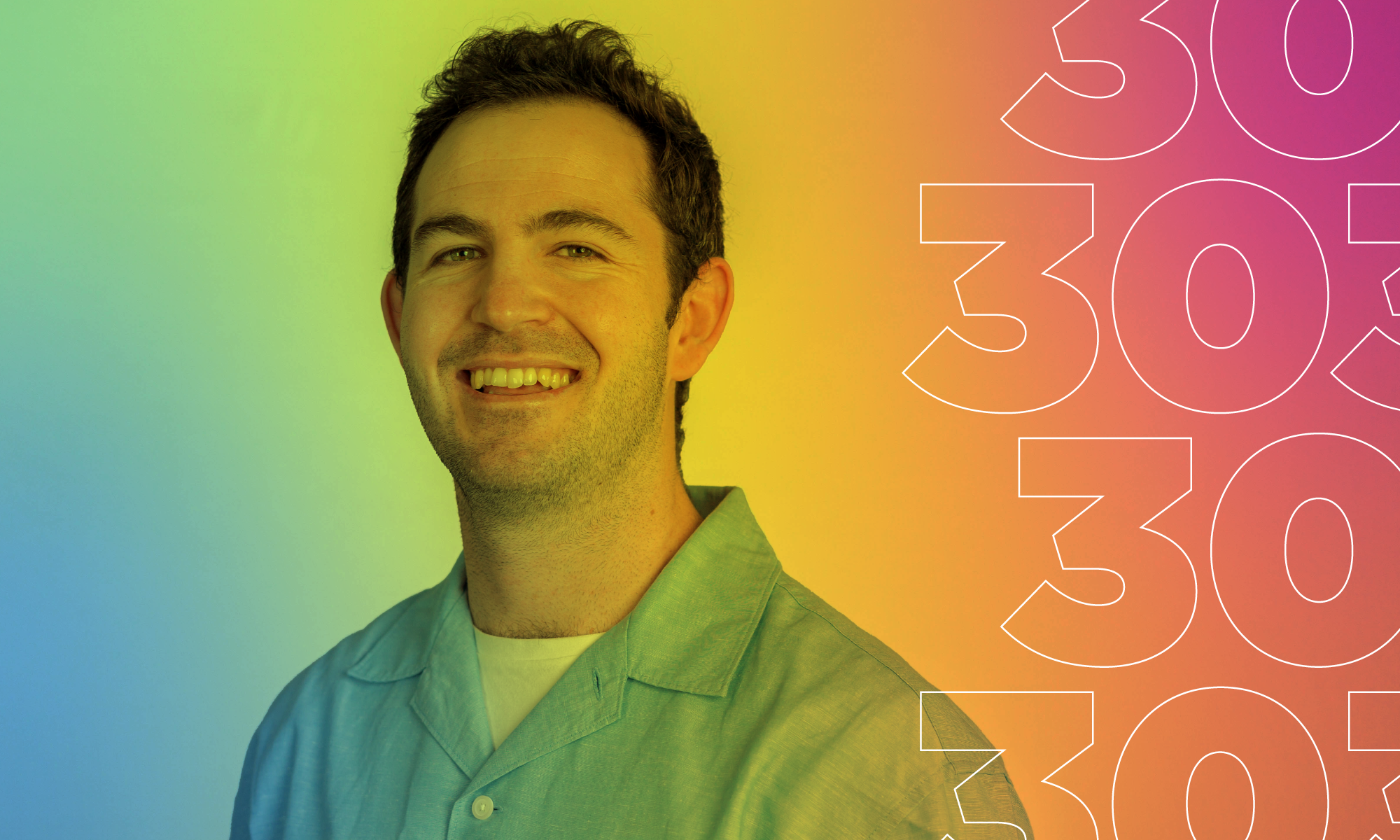
Ten categories. Thirty young visionaries making their mark on the Isle of Man. Introducing the 2024 #Gef30Under30 winners: the next generation of our island’s leaders.
The Zurich Innovation winners are some of the island’s sharpest young people, making strides in their careers while always prioritising growth and learning.
What is your name and age?
Dominic Wall, age 29.
Job title or role in the community?
I am an Assistant Manager in the Deloitte Isle of Man ESG Advisory and Assurance team.
Current organisation, business or employer?
Deloitte Isle of Man.
How did you start your career or role in the community?
I started an internship with Anglorand Capital in my second year of university in Cape Town South Africa, in which I went on to join them full time after completing a Bachelor of Commerce in Financial Management. I then joined Capital International Group where I gained exposure in investment management and dealing which led me to joining their office in the Isle of Man. In 2019, while studying further to complete an investment management certificate, I came across a module on Environmental, Social and Governance “ESG” which really sparked my interest!
I decided to focus on learning as much as I could about business sustainability and volunteered in the community. I really went down the rabbit hole on this topic. 5 years, 7 sustainability related courses, many podcasts, and documentaries later- I am more fascinated and hopeful than ever.
It’s true what Albert Einstein said, “the more I learn, the more I realize how much I don’t know”.
After gaining experience in financial services, ESG insights and clean technology industries; I am delighted to now work at Deloitte, assisting entities with climate and sustainability factors to mitigate risks and capitalise on significant opportunities to enhance society and the planet whilst creating long-term value.
Businesses have a crucial part to play in decarbonising their operations and supply chains, as well as mitigating nature loss. I am truly grateful I get to align my career with my passion for sustainability by working with organisations towards creating a net zero and nature positive future.
Tell us about your business/industry, is there something interesting about it that most people wouldn’t expect?
Here are some morbid yet motivating statistics on the state of nature in the UK and how the finance sector is a key driver in turning things around.
- The UK Finance sector is confronted with the two greatest risks it has ever faced; climate change and the collapse of nature. Both crises are intricately connected and pose existential threats.
- If the financial sector in the UK was a country, it would be the world’s ninth largest emitting country, we have begun to tackle the climate crisis but until very recently we had completely overlooked the crisis in nature. The UK is bottom of the G7 and G20 nations in terms of nature depletion and the bottom 10% of all the countries in the world.
- £8.1 trillion per year accrue from nature globally and over 395 million jobs will stem from Nature and services it provides by 2030.
- Half of the world’s GDP is moderately or highly dependent on nature, two percent of the global GDP per year on incentives which are harmful to nature.
- Nature is in free fall: Global populations of species- an indicator of healthy ecosystems – have crashed by an average of 69% since 1970.
The UK has lost:
- 50% of its biodiversity
- 70% of its ancient woodlands
- 90% of its natural wetlands
- 92% decline in seagrass
- 97% of its flower rich grasslands (wildflower meadows)
Roughly £322 trillion of capital is out there in the Global Financial system, which is many times what is needed to solve the climate crisis the nature crisis simultaneously. We need to invest at least £9 trillion dollars in nature between now and 2050 to have any hope of limiting warming to 1.5 degrees. Scientists have also already told us that 37 percent of climate mitigation and adaptation will come from nature-based solutions.
In the UK our Net Zero future could be secured by ecosystems we have totally undervalued. Peatlands are one of the best examples we have of the multiple benefits that healthy ecosystems bring to society. The high-quality water that they filter into British Rivers is estimated at a value of about 888 million pounds per year. UK’s peatlands could sequester more than 3 million tons of carbon dioxide every year, but we have drained, burned and grazed them and now this precious asset emits more carbon than it absorbs. It’s been estimated that the cost of restoring all of Britain’s peatlands would be about 20 billion pounds and yet the carbon benefits alone from doing that would be about a hundred billion pounds.
Have you experienced any hurdles in your career or community efforts and if so, how did you overcome them?
When I was 10, I was told I was deaf and given large clunky hearing aids to wear. Naturally, in fear of what people might think of me I didn’t wear them throughout school and feel this may have affected my academics.
I started wearing hearing aids again in university (by then the technology had really improved), adjusted my approach to learning and followed my interests- these components coupled with hard work have helped me get to where I am today!
These days, I can’t live without my hearing aids! They’re essentially like small air pod’s where I’m able to listen to music, podcast, and answer phone call. When I’m on a phone call in a restaurant people sometimes think I’m talking to myself as they can’t see the hearing aids.
A lesson I learnt that wish I knew when I was 10 is that people aren’t thinking about you as much as you think they are.
Tell us about why you think you won the category you did?
Interest and innovation around sustainability in the Isle of Man. I am an optimist and passionate about addressing the climate and ecological crisis. With a background in financial services and clean technology, I am fascinated by the positive potential of Artificial Intelligence (AI) and Machine Learning (ML) for sustainability.
From a professional development perspective, I would love to network and share knowledge with the cohort about the AI/ML use cases for business sustainability reporting such as:
- Automated information mining of bulk business sustainability documents
- Text analytics and sentiment analysis
- Prediction of compliance probability with ESG frameworks and regulation
- Digital twins to model projects before creating an environmental impact
Who are your role models, either on-island or off, in your sector or outside of it?
On island – Charlotte Lewis is a mentor I am lucky to have. I am grateful for Charlotte taking an interest in my professional development, encouraging learning through supporting external courses, participation in events and working groups and suggesting resources. I appreciate Charlotte giving me ownership of tasks in campaigns such as the Deloitte Climate Collective and other business sustainability projects. She is a very selfless, empathetic, and appreciative leader.
What do you wish you knew when you were getting started in your career?
Follow your interests and curiosity, and be proactive.
What are your plans for the future?
I plan to continue learning about the rapidly evolving realm of sustainable finance, climate & nature reporting, and natural & social capital valuation. I hope to remain curious and committed to lifelong learning on these topics to make an impact towards nature restoration.
As I travel on long haul flights about once a year to return to South Africa to visit family and friends, I feel ‘climate guilt’ for not living fully by my values. I am a member of the Manx Wildlife Trust and am exploring how in a personal volunteering capacity I can offset my carbon footprint through tree planting starting in September and/or Peatland restoration.
I’m interested in Peatlands powerful sequestration benefits. The UK has lost 90% of its natural wetlands since 1970, through a local personal and/or business carbon offsetting scheme human and financial capital can be deployed to restore this important ecosystem.
People and businesses can offset the carbon emission they are unable to abate and ecosystems in free fall get restored. It’s a win-win! I hope to assist with local nature restoration projects for high integrity carbon offsetting/credits.
I would love to help create a personal/business carbon sequestration calculator platform to measure the amount of carbon offset from nature-based solution projects to assist in restoring species populations and ecosystems.
Professionally, as a proud member of Deloitte Isle of Man environmental subcommittee, I hope to implement more sustainability initiatives locally. I plan to keep championing the Deloitte Climate Collective, our business led ESG network supported by the Isle of Man Chamber of Commerce and UNESCO Biosphere. Our aim is to bring together communities and businesses to create a sustainable future and make a positive impact by enhancing environmental, social and governance developments on the Island.
I look forward to continue assisting companies as much as possible with Climate and Sustainability advisory and assurance services.
Outside of the sustainability space, I look forward to spending more time with my fiancé and friends, playing guitar, and exploring the Islands breath-taking nature, by sea kayak, bike or on a hike!
What changes do you hope to see in your sector or community in the coming years?
I hope to see progress on climate and sustainability reporting guidance in the Isle of Man. The Paris Agreement on climate change was formally extended to the Crown Dependencies on 22 March 2023 by the UK. We have committed to being net zero by 2050 but willing companies have little direction on how to disclose their emissions from the relevant regulators. Development of sustainable finance regulation in the Isle of Man is also needed to direct capital towards projects we need to see exist in the world and mitigate greenwashing.
It’s promising to see developments behind Cleantech innovation, Sustainable Finance in Government and industry, Peatland and Blue Carbon restoration and adoption of the Crossags pilot carbon credit scheme. I hope to see continued growth and support behind these initiatives.
I hope we leverage our Islands status as being the world’s only whole-Nation UNESCO Biosphere. We have a fantastic opportunity to use the Biosphere as a testbed for sustainability initiatives to show the World what can be achieved from an Islands perspective, and, if successful, adopted and scaled throughout other regions.
My aim is to assist with local nature restoration projects for high integrity carbon offsetting/credits with the Manx Wildlife Trust.
What, for you, are the benefits of staying on or moving back to the island for young people under 30?
The networking benefits on the Isle of Man. It’s great being able to meet people from across industries, and many decision makers, if you are persistent enough, are open to having a coffee with you. The Island offers an excellent quality of life. Safety, healthcare, and access to the outdoors are things you cannot put a price on.
What does being a Gef’s 30 Under 30 winner mean to you?
The world! Since first winning Gef’s 30 Under 30 awards in 2023, I have had a huge boost in my career, confidence, and network, which has led me to endeavour to have a greater impact towards my mission of supporting businesses sustainability transition and financing nature restoration.


You must be logged in to post a comment.