
Innovation
Gef’s 30 Under 30 2024 Winners: Q&A with Ellen Wilson
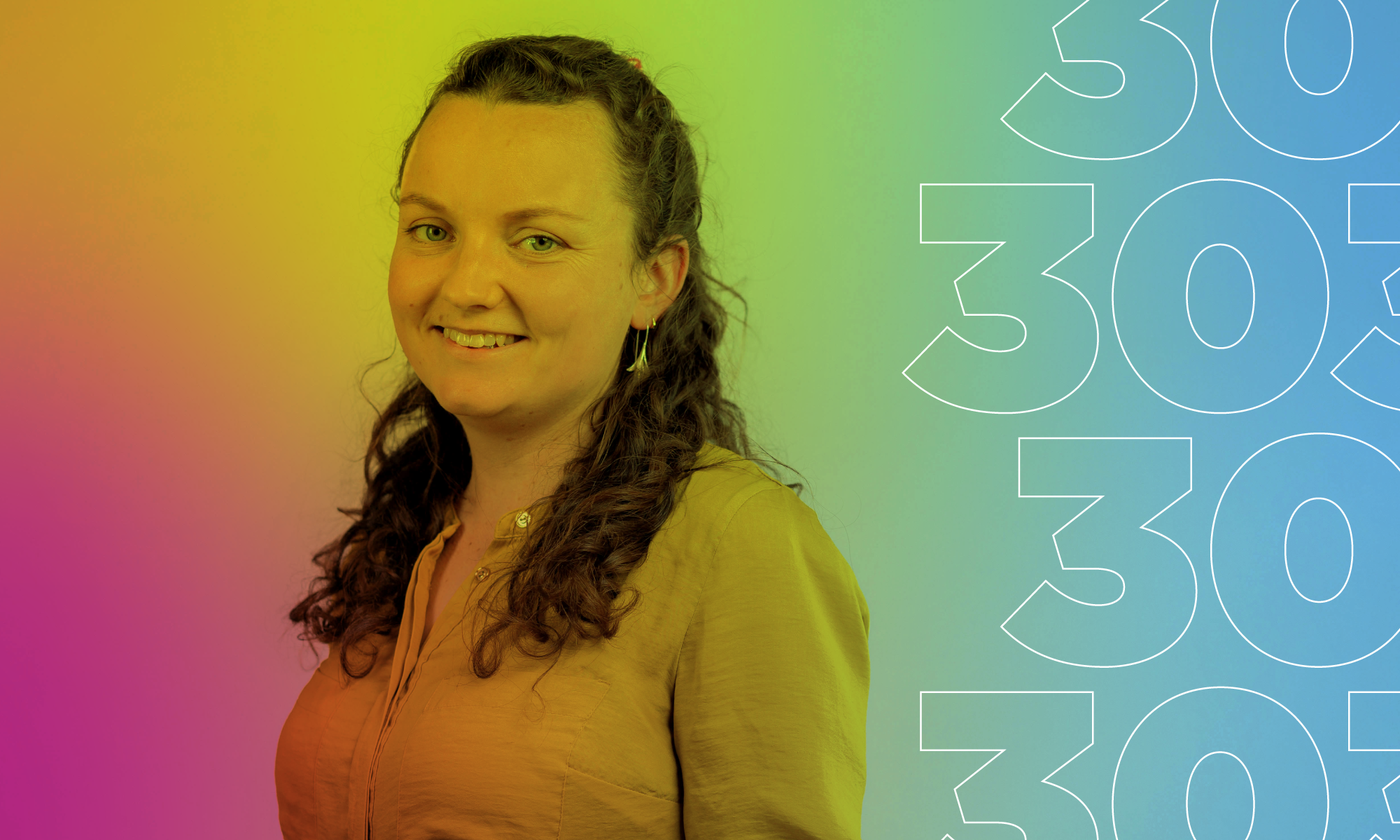
Ten categories. Thirty young visionaries making their mark on the Isle of Man. Introducing the 2024 #Gef30Under30 winners: the next generation of our island’s leaders.
The Zurich Innovation winners are some of the island’s sharpest young people, making strides in their careers while always prioritising growth and learning.
What is your name and age?
Ellen Wilson, age 27.
Job title or role in the community?
Doctor of Chemistry, Research Scientist.
Current organisation, business or employer?
The European Spallation Source, Lund, Sweden.
How did you start your career or role in the community?
How far would you like to go back? I remember the science teacher at RGS who sold science A-levels to me. He gave me a chemistry question to tackle at the end of a GCSE class and I got really stuck in and found it so satisfying to solve. He then told me it was an A-level exam question, and clearly I would love the subject. When I finished my undergraduate study, a couple of professors got hold of my grades and I had a few PhD position offers. I remember the first time I was accepted for a presentation at an international conference during my PhD studies, and how exciting that was. I can tell you by heart the day I was left speechless when I won the “best research” award from that conference, and realising that I actually loved presenting. That was a game changer, presenting is a really important part of a researcher role. Throughout my PhD, being chatty really paid off. It got my name known and opened up so many opportunities, just for being friendly. When I finished my PhD, my supervisor passed my CV to a colleague in Sweden. Shortly after I got an email with a job offer for a role at an exciting brand-new world class facility, based in Sweden. And now I’m blown away every single day that I’m here. If you told me what was coming when I was an 18-year-old Ramsey girl, I wouldn’t have believed you!
Tell us about your business/industry, is there something interesting about it that most people wouldn’t expect?
You travel the world much more than you’d think! Even with the two-year pause due to Covid, for work I’ve been to Germany, France, Portugal, Spain, the Netherlands, Denmark, New Zealand and, of course Sweden, and I’m adding Switzerland to that list later this year. Thank goodness English was chosen as the international language of science!
Have you experienced any hurdles in your career or community efforts and if so, how did you overcome them?
Imposter syndrome has been a big challenge in my career as a young scientist. While I was studying for my PhD in Chemistry, I often felt like I didn’t deserve my position and was constantly in fear of being discovered as a fraud. But gradually I realised the opposite was happening. My research findings – that I really doubted and thought were probably rubbish – were impressing my bosses, attracting industry attention, and bringing me amazing opportunities. As I slowly gained more confidence, I discovered that I really loved science research. I started putting myself out there, winning a couple of awards for international conference presentations, taking on some teaching and eventually being invited to give a presentation in New Zealand and head-hunted for a job in Sweden. In my experience, the world of cutting-edge chemistry research is very lacking in young women. Only 9% of chemistry professors in the UK are women(!) so there is a massive imbalance in the industry and a lack of female role models. When I was giving project updates to the sponsors of my PhD research, it would be a room full of older men, and one young woman (me!). At first that was pretty nerve wracking and it took me a really long time to gain the confidence to speak up, especially when I knew I had good ideas. But confidence comes with time and experience and a supportive network. Imposter syndrome still rears its head – for example I cringe when I hear my Dr title used because it doesn’t feel right – but now I hold my head high as a young woman with a postdoctoral role in research, and hope I can one day be a role model to others venturing down this career path.
Tell us about why you think you won the category you did?
Science is all about finding solutions. The research that got me a PhD was in making Dulux paint more environmentally friendly, and I studied it using X-rays. I built and designed new equipment, came up with new methods and got heavily involved in developing instruments. Every day is about innovation, findings creative solutions to uncover new things. It’s also about resilience – the constant cycle of trying an idea, seeing it fall short, and then refining it, again and again. It’s amazing how quickly you get used to failure, but that’s the nature of research and every failure brings you closer to success. And the days when all that perseverance pays off, and you’ve discovered something brand new that wasn’t known yesterday, those days are incredible.
Who are your role models, either on-island or off, in your sector or outside of it?
Dorothy Hodgkin was awarded the Nobel Prize in Chemistry in 1964 – only the third woman ever to receive it. The newspapers at the time ran headlines like “Oxford Housewife wins Nobel” for “a very unhousewifely skill” and described her as an “affable looking housewife”. It seems they couldn’t see past the fact she was a woman, and a mother of three – which if anything makes her achievements even more impressive! She was the first person ever to receive maternity pay from Oxford University, as they decided that they couldn’t afford to lose her as staff. In the every-man-for-himself setting of academia, where success is often awarded to those who shout the loudest, Dorothy was a quiet, humble, hard worker who showed kindness to her colleagues and let her results and achievements speak for themselves. I work in a similar to field to hers (and I can’t believe that they used to do it without computers!), and I would like to follow in her footsteps – I’m not sure about a Nobel prize but certainly I’d like to be remembered as she is. If I’m going to succeed, I’d like it to be through hard work and passion, with down-to-earth humility and kindness to others.
What’s the best piece of advice you’ve ever received?
Chat to everyone – you never know what opportunities will come of it.
What do you wish you knew when you were getting started in your career?
How much fun it was going to be. It took me months to make the decision to take a PhD role after a professor offered me the chance –I couldn’t see myself in academia, I didn’t think I was tough enough. But I’m so glad I did and grateful to all the people who helped me make that choice. I love my job. Cutting edge research it so much fun! The things we can do with science these days blows my mind, I’m still not over how incredible the technology and instruments at work are even though I use them every day. Yes, there are good days and bad days; there’s been some challenging periods, but there’s also been some incredible ones. I’ve met amazing people, been amazing places and done amazing things.
What are your plans for the future?
I’m posted in southern Sweden for the next three years (which is surprisingly homely! The wildlife and the Viking influences really make me feel like I’m home in Ramsey some days). Honestly, I don’t know, and that’s sort of intentional. The last few years have taught me not to get fixated on plans but instead prepare myself to seize the opportunities that come my way. That’s how the most exciting things I’ve done have come about. A few years ago, I never could have imagined being in this position, with a doctorate and a permanent job in a world-class facility. Ten years ago, I hadn’t even decided I was going to study chemistry, let alone make it my career. So, I’m trying to enjoy the days as they come and keep my options open. However, I know that I’d like to stay in research, and I’d like to keep doing some teaching. I really enjoy making difficult science accessible to my students.
What changes do you hope to see in your sector or community in the coming years?
I’d like to see an increase in diversity through outreach to the next generation. There is so much exciting and fascinating research going on that, if communicated in the right way, could kick start the exciting career of a future Nobel prize winner. Similarly, like most specialist industries, scientists often struggle to communicate their work in “layman’s terms”, but what’s the point in an amazing discovery if you can’t tell anyone about it! For example, green washing by some industries to the public is a major issue, even though scientific knowledge is way ahead of current government policy. But it’s difficult to get your findings heard unless you can make your research convincing, engaging and understandable to the general public. We need to get better at de-sciencing our science for greater impact.
What, for you, are the benefits of staying on or moving back to the island for young people under 30?
Surely the work-life balance the Isle of Man offers has got to be second to none. Beaches, fells, glens and everything in between, all right on your doorstep. Close communities, family around the corner and friends just down the road. In my experience, the city life over in the UK doesn’t come close.
What does being a Gef’s 30 Under 30 winner mean to you?
I’m really quite blown away by the award. Working in such a competitive industry, naturally I’m surrounded by loud voices shouting about their successes all the time, and it becomes easier to keep your head down and fly under the radar. It might sound like an oxymoron, but it’s quite humbling to feel seen.


You must be logged in to post a comment.