
Community
Painting Changes How we View Laxey’s History
The 1840 portrait was bought at a London auction house.
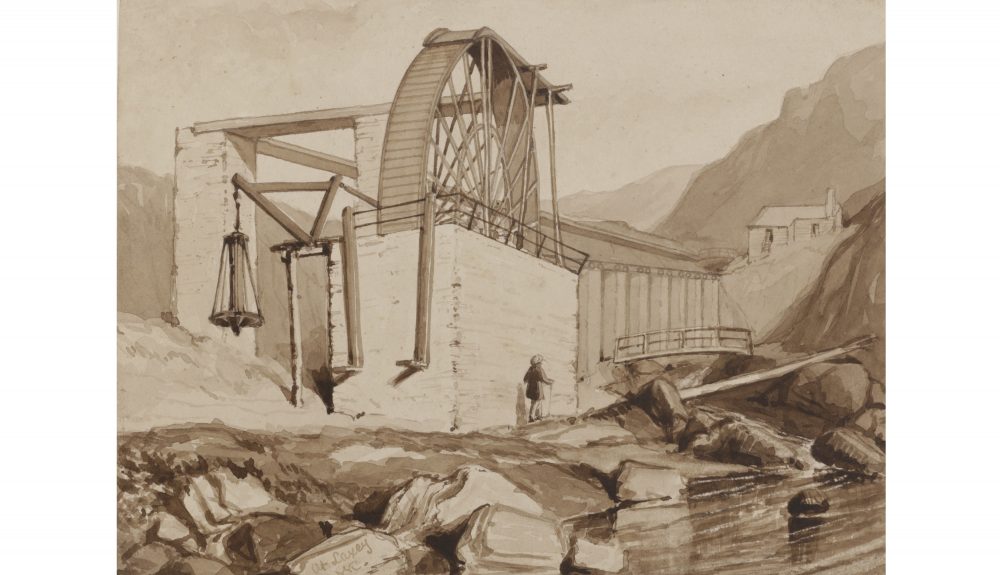
A mid-19th century painting has changed the way Manx National Heritage views the history of the Great Laxey Wheel.
The 1840 portrait was part of a selection of watercolours from a gentleman’s tour of the British Isles that was bought at a London auction house.
Named Laxey Wheel, closer inspection of the painting revealed that this was not the much-loved Lady Isabella, though the location in the Glen Mooar valley was accurately depicted. Instead, it is believed that the painting shows the pre-cursor of the world-famous waterwheel.
Curator of Art & Social History Matthew Richardson commented: ‘When I first saw this I was immediately intrigued; not wishing to get my hopes up too early I consulted a number of colleagues including renowned Laxey expert Andrew Scarffe BEM. All confirmed what I was thinking, that this was a portrayal of the original wheel, previously only known as a silhouette in the distance in another painting.
‘This new picture shows us how that first wheel worked in great detail, and it adds enormously to our understanding of the site. Clearly, the Lady Isabella did not arrive fully formed in the mind of the designer Robert Casement. Instead, he drew on certain elements of the previous wheel, but altered and improved others. It may even be that a whole section, the rod duct, was carried over from that first wheel.’
Designed by Victorian engineer, Robert Casement, the Great Laxey Wheel, as we now know, was built to pump water from the depths of the Laxey mines using water from Glen Mooar to power the wheel. She is, of course, the world’s largest working waterwheel.


50 Years, Three Generations And Thousands of Windows

Josh Secures £300k Backing For Gaming Venture

Review: ‘Easily Tom Holland’s Best Outing As Spider-Man’

New Hotel Plan for Peel
