
Emergency Services
200 Years of Seafaring History: The RNLI
The RNLI is celebrating its 200 year anniversary this year!
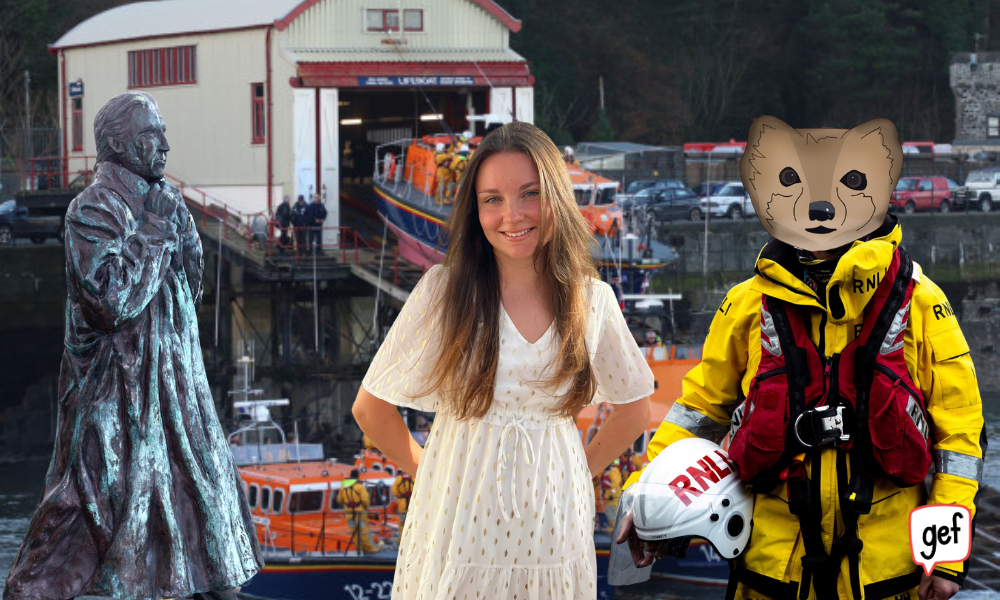
This year – 2024 for all of you still writing ‘23 down when you have to date something – if anyone actually still writes anything down – is a very exciting year. Why, I hear you ask? Well, because the RNLI (Royal National Lifeboat Institution in case anyone was wondering) is celebrating its 200 year anniversary, of course!
Being a small rock surrounded by sea, it may not come as a surprise that our island has some very close links to the history of the RNLI – after all, Sir William Hillary – who was not a Manxman but he lived here for long enough – 1808 until his death in 1847, to be exact – put forward the key proposal for a National Lifeboat Institution that we now know as the RNLI.

Sir William Hillary RNLI website
As such, the RNLI is an integral part to the ‘everyday’ history of the Isle of Man, so in honour of its 200 year anniversary, I am going to tell you a bit about our Manx connections, and the important role the RNLI has had on the island since its inception.
It was in Douglas, where Hillary lived at Fort Anne, that he experienced with his own two eyes just how dangerous the sea could be. Witnessing dozens of shipwrecks around the Manx coast, it is said that it was the wreck of HMS Vigilant in 1822 – followed two months later by the wreck of HMS Racehorse – that pushed Hillary to come up with a solution to try and better save lives at sea. In the early 1900s there was an average of 1,800 shipwrecks a year around Manx coasts – something that is hard to imagine happening now.

HMS Racehorse
Anyway, Douglas was one of the earliest places in the whole of the British Isles to be provided with a lifeboat. This did not actually have much to do with Hillary, as it was 1802 when the first lifeboat was sent to Douglas and the first station was built. The boat was ordered (not to make it sound like he was online shopping) by the Duke of Atholl and it was built by Henry Greathead, a pioneering rescue lifeboat builder.
After witnessing the two significant wreckages of HMS Vigilant and HMS Racehorse within such close proximity to one another, Hillary drew up plans for the implementation of an organised lifeboat service crewed by trained people. In 1823 he published the attractively titled pamphlet, ‘An Appeal To The British Navy On The Humanity And Policy Of Forming A National Institution For The Preservation Of Lives And Property From Shipwreck’ – which initially received little response from the Admiralty (maybe they didn’t have time to read the title), but gained the attention of several London philanthropists who adopted the plan.
[https://manxnationalheritage.im/news/exhibition-to-mark-bicentennial-of-hms-racehorse-tragedy

The title page of Hillary’s 1823 pamphlet, ‘An Appeal To The British Navy On The Humanity And Policy Of Forming A National Institution For The Preservation Of Lives And Property From Shipwreck’. Wellcome Collection
One of the most telling tales of the success of the implementation of the RNLI was in 1830, when Hillary (at 60 years young) took part in the rescue of the crew of the packet St George, which had foundered on Conister Rock (AKA where the Tower of Refuge now is) at the entrance to Douglas harbour. Hillary commanded the lifeboat, was washed overboard with others of the lifeboat crew, yet finally everyone aboard the St George was rescued with no loss of life. This was not quite enough for Hillary, however, who consequently took the precaution of building the Tower of Refuge, which opened in 1832 – just in case it happened again.

An early photograph of the Tower of Refuge from c. late 1800s. iMuseum
Between the inception of the RNLI in 1824 and 1851 – which is the year the first Douglas lifeboat station seems to have lapsed, before the second (and current) station was opened in 1868 – it is thought 91 lives were saved by the Douglas lifeboat alone.
A more recent event to go down in the history books of the Douglas lifeboat station was the achievement of Emily Heaton, who passed out as Douglas’s first female coxswain on an all-weather lifeboat last year – being only the second female coxswain on the island. It was only 1969 when the first trained woman – Elizabeth Hostvedt – was allowed to command an inshore lifeboat. Even at that time, Hostvedt was met with resistance to her request to join the crew – over ‘doubts over whether a woman would have the strength to pull heavy bodies from the water, and the stamina required to man the lifeboat in strong gales.’ The role of women in the history of the RNLI (and in general) is an important one and a big shoutout goes to all of the inspirational women involved in saving lives from the sea.

Emily Heaton upon becoming the first female coxswain for douglas lifeboat station. RNLI
We must not forget, however, that Douglas lifeboat station is only one of five our island boasts. Ramsey lifeboat station was established in 1829, just five years after the creation of the RNLI. The south of the island had its first lifeboat house constructed in Port Erin in 1884; shortly followed by the Peel lifeboat house in 1885 and finally Port St Mary in 1896. Well over 100 years later all five lifeboat houses are still fully functioning and actively in service helping to save lives.

Peel RNLI lifeboat by Nick Shimmin Emaiom Photography
If you have been inspired by the local history of the RNLI, you can keep up to date with the 200 year anniversary celebrations through the RNLI website and through local social media pages.


50 Years, Three Generations And Thousands of Windows

Josh Secures £300k Backing For Gaming Venture

Review: ‘Easily Tom Holland’s Best Outing As Spider-Man’

New Hotel Plan for Peel

You must be logged in to post a comment.