
Emergency Services
Crews Need Better Work Life Balance
A group visited the Island in January 2023 to undertake the review
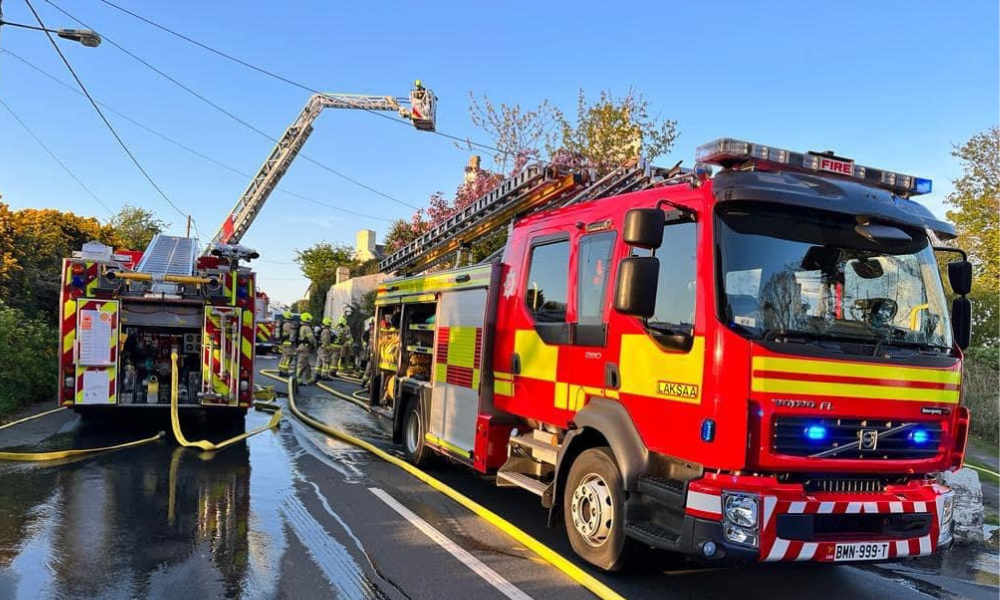
The island’s fire fighters have been praised for their dedication to keeping the island safe by an independent peer review.
A group of senior Fire and Rescue officers from across the UK, led by an officer from the Local Government Association (LGA), visited the Island in January 2023 to undertake the review.
The peer group found that the service’s leadership was aware of the challenges faced in delivering a modern service on an island, geographically isolated in relation to other service partners.
That report said: ‘They are willing to go ‘above and beyond’ to save lives and protect the island’s communities and are proud of the work they do. Officers and firefighters are committed to being adaptable, flexible and multi- disciplined – this is important given the island’s small size and isolated geographical location in relation to other Fire and Rescue Services.’
However, it added: ‘Uniquely the island’s firefighters also provide maintenance and engineering support to maintain operational equipment and again, this is different to most FRSs in the UK. Peers heard how during the pandemic, this worked well as the island’s FRS could operate independently to the UK and maintain service delivery.
‘However, the peer team heard how this, at times, can result in officers feeling stretched and undervalued due to undertaking multiple roles. For example, peers were told that some officers have up to eight lead responsibility areas in addition to their primary role. Some officers also felt that current shift patterns and ways of working are not flexible enough to ensure a positive work life balance. Peers heard that “our biggest strength is our biggest weakness, everyone wears multiple hats,” that “workloads are high, and we feel we are spinning plates”.’
To address this, the fire service has been encouraged to undertake a workforce review which ‘should be aligned to work to develop an FRS Risk Management Plan’.
Speaking of the report, Interim Chief Fire Officer, Mark Christian, said: ‘I’m immensely pleased at the recognition our staff have received in this review by our UK counterparts. We’re always striving to improve the service, to make sure that we’re keeping everyone on the Island safe in the best way we can. We are already working towards some of the recommendations that have been made, so it’s reassuring that we’re heading in the right direction.’
John Wannenburgh MHK with delegated responsibility for Fire and Rescue Services added: ‘This voluntary peer review process has been incredibly useful in highlighting where our Island’s Fire and Rescue service is thriving, and for helping to identify some of the steps that we can take to make improvements. I look forward to seeing the service evolve with some of these suggestions.’
The full report is available to read online.
Recommendations
In total, the report made 15 recommendations:
Recommendation 1
Review the FRS legislative framework in support of modernisation and the delivery of statutory responsibilities. Peers understand the Department of Home Affairs has committed to allocating drafting time and the appropriate resources to modernise fire legislation from 2023.
Recommendation 2
A number of senior leadership team posts within the FRS, including that of the Chief Fire Officer, are currently held on an interim basis which has created some uncertainty about the future direction of the service. The peer team would encourage the Department of Home Affairs and FRS to work towards creating greater stability within the FRS’s senior leadership team as soon as possible.
Recommendation 3
The FRS should review the approach to scrutiny and assurance of the service. The FRS should consider how the performance framework can be strengthened to include smarter, more outcome focussed indicators, standards and targets which are more closely aligned both to the Strategic Plan and emerging FRS Risk Management Plan. This will support greater managerial and political oversight, enhanced accountability and improved service delivery.
Recommendation 4
The FRS should review and refresh the FRS’s risk register and align this to the wider department’s risk register. It is important to undertake this update as a priority and then to agree a regular future cycle for reviewing and updating the register. The FRS should also set out clear governance arrangements for monitoring the risk register.
Recommendation 5
The scheme of delegation for the FRS was unclear to the peer team and as such the FRS should consider how they can build greater clarity and understanding for all involved. There should be a clear and well defined ‘scheme of delegation’ which considers the decision-making powers of the Minister, Lead Member, Chief Executive, Chief Fire Officer, Deputy Chief Fire Officer and senior officers. This will help ensure greater organisational clarity in relation to ownership and accountability for decision making.
Recommendation 6
The FRS should, as a priority, develop a Risk Management Plan that reflects and responds to all foreseeable risk, with agreed timescales for development and delivery. The FRS needs to both resource and maintain a relentless drive and commitment to this work. This plan should be informed by the FRS’s strategic priorities and Island plan.
Recommendation 7
A formal ‘blue light’ forum should be established to discuss all matters related to joint working and collaboration. This will strengthen work already taking place to explore wider collaboration such as opportunities for co-location including the feasibility of developing a ‘Blue Light Hub.’ Given the small Island context and budget pressures, the peer team believe that this type of collaborative working is vital.
Recommendation 8
Review arrangements in place to deal with significant/major incidents. This should include revisions to the FRS’s strategic, tactical and operational command rota. These revisions should ensure appropriate levels of command are in place to deal with major incidents, and that the capability exists to service a strategic coordinating group alongside a multi-agency tactical group whilst dealing with the operational demands of an incident. The service also needs to work with the Emergency Service Joint Control room (ESJCR) management team to ensure that the capacity and resilience of the ESJCR is sufficient to mobilise, coordinate and control a large, protracted, multiagency incident.
Recommendation 9
Undertake a Workforce Review to ensure you have the right people, in the right place with the right skills. The review should consider workloads. It was clear that in certain areas of the organisation staff were overstretched. The review should consider if it can identify additional resource or release capacity to ease the burden on those individuals. This review should include a fundamental review of the on call and wholetime on call duty systems.
Recommendation 10
As part of the proposed Workforce Review take steps to strengthen approaches to staff communication and engagement. Processes should be in place which recognise the value of staff.
Recommendation 11
A draft Safeguarding Policy is under development. The FRS should finalise this at pace and continue to engage all stakeholders in its implementation. Peers would also recommend that the background checks in place, including Disclosure and Barring Service checks, are reviewed to ensure they reflect the role undertaken by all staff across the service.
Recommendation 12
Work alongside ICT Shared Services to agree the direction that digital investment will take over the next four to five years to support the FRS Strategic Plan. This should include investment in data and digital solutions which facilitate the production of real time, accurate data collation and analysis to underpin future business cases, management of risk, inform decision making and improve service delivery.
Recommendation 13
Review the Shared Service arrangements applicable to the FRS to ensure they are fit for purpose and are providing an effective service. The review should explore how the FRS requirements are met and how any barriers, real or perceived, can be addressed. The FRS should, as a minimum, adopt service level agreements (with relevant Shared Services) which set out agreed ways of working and timescales for achievement in order to strengthen accountability.
Recommendation 14
Promote and strengthen Equality, Diversity and Inclusion for the workforce. Utilise insight to inform the approach including staff engagement, networks, data collection and equality analysis.
Recommendation 15
The FRS should work alongside colleagues within the Department of Home Affairs to develop a long-term estates strategy which aims to ensure the provision of accommodation that matches the requirements of a modern-day FRS and aspirations for the future. The development of the strategy should consider opportunities to collaborate with partners, particularly the other emergency services.
The full report is available to read online.


