
Lifestyle
‘We’re just friendly people doing what we love’: Life in drag on the Isle of Man
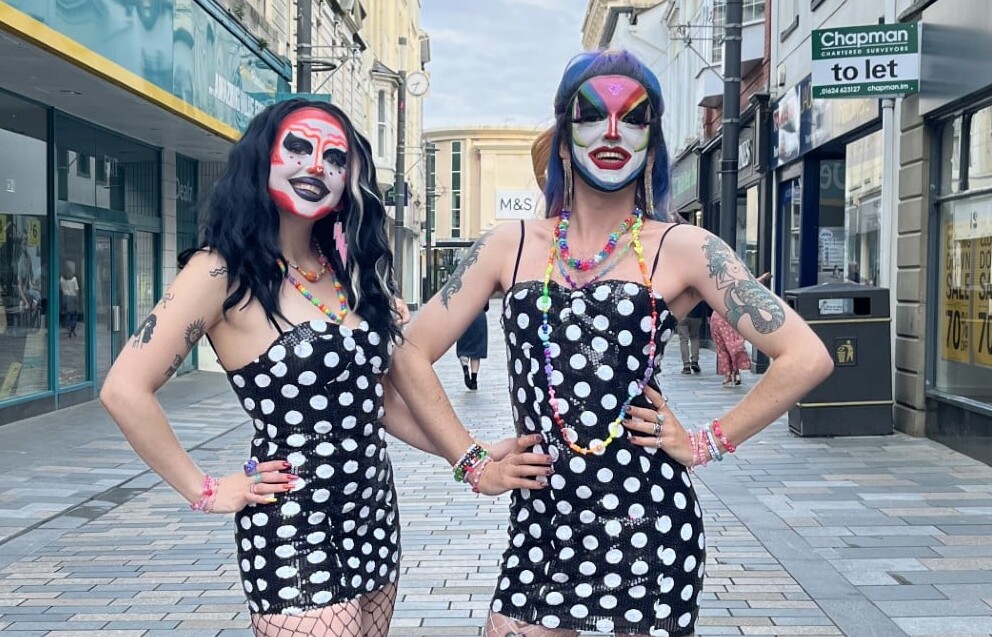
The weather was dull the day I interviewed Owen Atkinson and Ashton Gibson. Not that it mattered, as soon as they walked in, they brightened up the room. And they weren’t even in drag. The two exuded what the Isle of Man summer often lacks – warmth and brightness. In their style, aura, and intellect.
Owen and Ashton are local celebrities in queer entertainment. Their drag alter-egos, Fenella Beach and Nona Binary, have hosted multiple events including Drag Sleepover Parties, Chapell Roan-inspired Pink Pony Club nights at Mad Jacks, and Drag Brunches at Kiki’s, often to sell-out audiences, showing a real appetite for queer entertainment.
But they’ve also been met with backlash. Mainly at the hands of ‘keyboard warriors.’ Through it all, Owen and Ashton have risen above hateful comments with the grace and integrity online trolls are incapable of. However, that doesn’t mean it doesn’t take its toll.
‘I tend to steer clear of Facebook comment sections in general. I’m a poet as well but it’s only the drag that gets people angry.’ Owen tells me. ‘I think people forget we’re real people underneath the makeup. Thankfully, the real world is much nicer.’
Owen started dabbling in drag while at university in Bristol, which has a thriving drag scene. Inspired, they came home and met up with Manx drag queen legend Vida LaFierce who showed them the ropes. Owen then went onto support Ashton into the world of drag.
‘I, like many, was obsessed with Ru Paul’s Drag Race’, Ashton tells me, laughing. ‘I had a very deep trans realisation during lockdown and started creating drag makeup looks in private, because I didn’t know how I could explain to people that I wanted to do drag. It felt so out of reach. Then one day, I saw Owen on Instagram, and I remember thinking, “there’s no way this person lives on the island, they’re too cool.” I went to one of the Drag Race parties they organised. That was the first time we met each other. I turned up out of drag and didn’t say that I wanted to do drag, but Owen clocked me and just knew. I was really shy, but they encouraged me. Eventually I cracked it, and I’ve never looked back.’
When it comes to dealing with comments sections, Ashton says they prioritise the support they get offline over online.
‘It felt very sobering to start with,’ Ashton says. ‘I’m privileged that in my personal life; it’s nothing but love. But sometimes those online comments are a harsh reminder that the Isle of Man is still backwards in a lot of ways. Sometimes people just need an outlet for hate. When I was younger, I felt lonely here, growing up as a queer and trans person. Our mission is just to make sure nobody else feels like that again. If you’re straight and cis and are homophobic, don’t come to our shows. It’s not for you. We’re doing it so the queer community can feel seen.’
It seems like a common-sense fix. Don’t like something that has nothing to do with you and doesn’t impact your life whatsoever? Leave it alone. Simple. At least it should be. But, as Ashton said, sometimes people just need an outlet for hate. But there has been progress on the island.

Left to right: Owen Atkinson (Fenella Beach) and Ashton Gibson (Nona Binary)
‘There’s definitely a difference between when I was growing up versus now.’ Owen says. ‘I think there’s a rainbow club in every high school, which we didn’t have when I was in school. That alone is a sign of great progress. And the youth service does a brilliant job. But, whenever there is progress, there is often pushback. Sometimes it feels like we’re going backwards, but I think we’re generally, hopefully, moving in the right direction.’
I asked Owen and Ashton why they think some people still have an issue with drag – overlooking that many of these same people probably wouldn’t meet the likes of Mrs Doubtfire, David Bowie, or the band members of Kiss with the same hateful fervour.
‘I think it comes from fear of something outside your own experience and also misinformation.’ Owen says. ‘Not only are people scared of what they don’t know, they’re also being fed hateful beliefs through their algorithms. And most platforms don’t do anything to combat that.’
Misinformation is often created and utilised to incite fear, so what are some of the common misconceptions circulating about drag that makes it so ‘scary’?
‘I think people have a narrow-minded view of what it is.’ Owen says. ‘They think we just put on a silly wig and do a silly dance. People think it takes no effort, that it doesn’t cost money, and it’s not a valid art form. Those things just aren’t true. There’s a lot of planning, and depth to drag. Just like people performing in plays, musicals, bands, it takes a lot of work.’
‘People also think it’s inherently sexual, which isn’t.’ Ashton adds. ‘And it’s also a misconception that only men do drag.’
June was Pride month. A time to celebrate the LGBTIQI+ community and how far they’ve come but also highlight how far there still is to go. I asked Owen and Ashton what they’d like to see change in the Isle of Man going forward.
‘I would love if the Isle of Man government would say they don’t stand with the Supreme Court ruling in Scotland. The privilege of having a separate government means we can show what we stand for.’ Owen says.
‘I think it’s vital the Isle of Man started looking seriously into trans healthcare.’ Ashton adds.
‘At the end of the day, we love the isle of man.’ Ashton tells me. ‘I love living here and doing drag here, and it’s hard because sometimes it can feel like the Isle of Man doesn’t love us back. But it would be nice for people to realize we’re kind, friendly people just trying to do what we love.’
Ashton and Owen have new events brewing in the background set for later this year, so watch this space. It’s bound to be fabulous.


50 Years, Three Generations And Thousands of Windows

Josh Secures £300k Backing For Gaming Venture

Review: ‘Easily Tom Holland’s Best Outing As Spider-Man’

New Hotel Plan for Peel

You must be logged in to post a comment.