
Politics
Failures of Leadership and Judgment
Sue Gray Day is here, kind of.
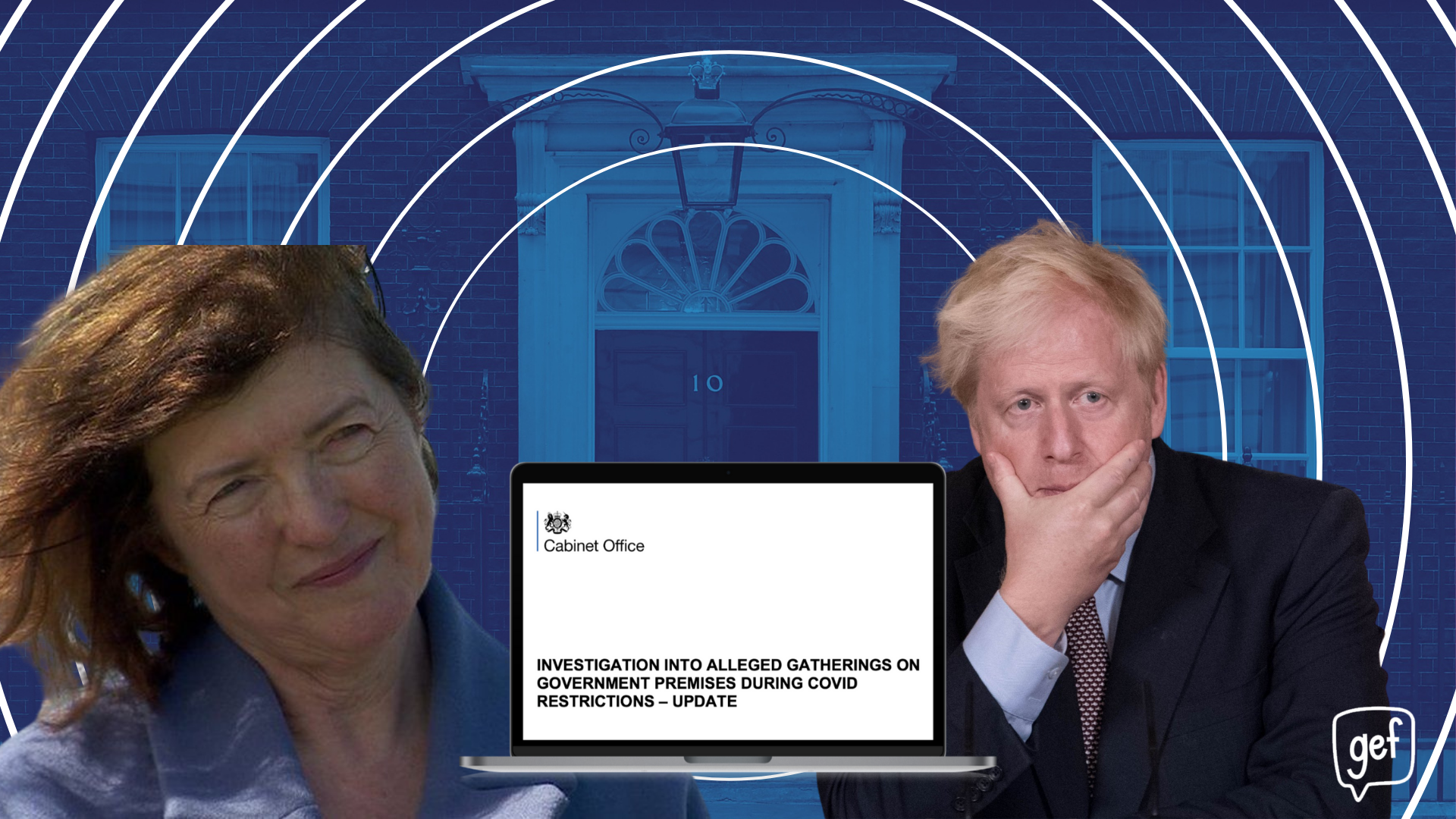
Sue Gray, the UK’s most famous civil servant, has said the behaviour in Downing Street during the pandemic ‘is difficult to justify’.
The report has looked at several parties/work events which happened in Downing Street during the pandemic, particularly when the UK was at the height of lockdown.
Ms Gray’s report, she makes clear, is not the definitive document. It is at nine pages, not a meaningful report, rather it is an update as to what she feels able to publish given the ongoing investigation by the Met Police, who are investigating 12 of the 16 allegations. That full report will still happen and be published, but we just don’t know when yet.
In her findings, Ms Gray has said, as well as saying the gathering are ‘difficult to justify’, that there was a ‘serious failure to observe’ the high standards expected of those working at the heart of Government but also what was expected of everyone else and that there was ‘too little thought given to what was happening across the country’.
She added that the ‘excessive consumption of alcohol is not appropriate in a professional workplace at any time’, that staff felt unable to raise concerns about the parties and that there were ‘failures of leadership and judgment by different parts of No 10 and the Cabinet Office at different times’.
In her conclusion, Ms Gray said: ‘Ministers, special advisers and the Civil Service, of which I am proud to be a part, were a key and dedicated part of that national effort. However, as I have noted, a number of these gatherings should not have been allowed to take place or to develop in the way that they did. There is significant learning to be drawn from these events which must be addressed immediately across Government. This does not need to wait for the police investigations to be concluded.’
Her General findings are:
Against the backdrop of the pandemic, when the Government was asking citizens to accept far-reaching restrictions on their lives, some of the behaviour surrounding these gatherings is difficult to justify.
At least some of the gatherings in question represent a serious failure to observe not just the high standards expected of those working at the heart of Government but also of the standards expected of the entire British population at the time.
At times it seems there was too little thought given to what was happening across the country in considering the appropriateness of some of these gatherings, the risks they presented to public health and how they might appear to the public. There were failures of leadership and judgment by different parts of No 10 and the Cabinet Office at different times. Some of the events should not have been allowed to take place. Other events should not have been allowed to develop as they did.
The excessive consumption of alcohol is not appropriate in a professional workplace at any time. Steps must be taken to ensure that every Government Department has a clear and robust policy in place covering the consumption of alcohol in the workplace.
The use of the garden at No 10 Downing Street should be primarily for the Prime Minister and the private residents of No 10 and No 11 Downing Street. During the pandemic it was often used as an extension of the workplace as a more covid secure means of holding group meetings in a ventilated space. This was a sensible measure that staff appreciated, but the garden was also used for gatherings without clear authorisation or oversight. This was not appropriate. Any official access to the space, including for meetings, should be by invitation only and in a controlled environment.
Some staff wanted to raise concerns about behaviours they witnessed at work but at times felt unable to do so. No member of staff should feel unable to report or challenge poor conduct where they witness it. There should be easier ways for staff to raise such concerns informally, outside of the line management chain.
The number of staff working in No 10 Downing Street has steadily increased in recent years. In terms of size, scale and range of responsibility it is now more akin to a small Government Department than purely a dedicated Prime Minister’s office. The structures that support the smooth operation of Downing Street, however, have not evolved sufficiently to meet the demands of this expansion. The leadership structures are fragmented and complicated and this has sometimes led to the blurring of lines of accountability. Too much responsibility and expectation is placed on the senior official whose principal function is the direct support of the Prime Minister. This should be addressed as a matter of priority.
50 Years, Three Generations And Thousands of Windows

Josh Secures £300k Backing For Gaming Venture

Review: ‘Easily Tom Holland’s Best Outing As Spider-Man’

New Hotel Plan for Peel
