
Politics
Minister’s Statement in Full
Read the full statement here:
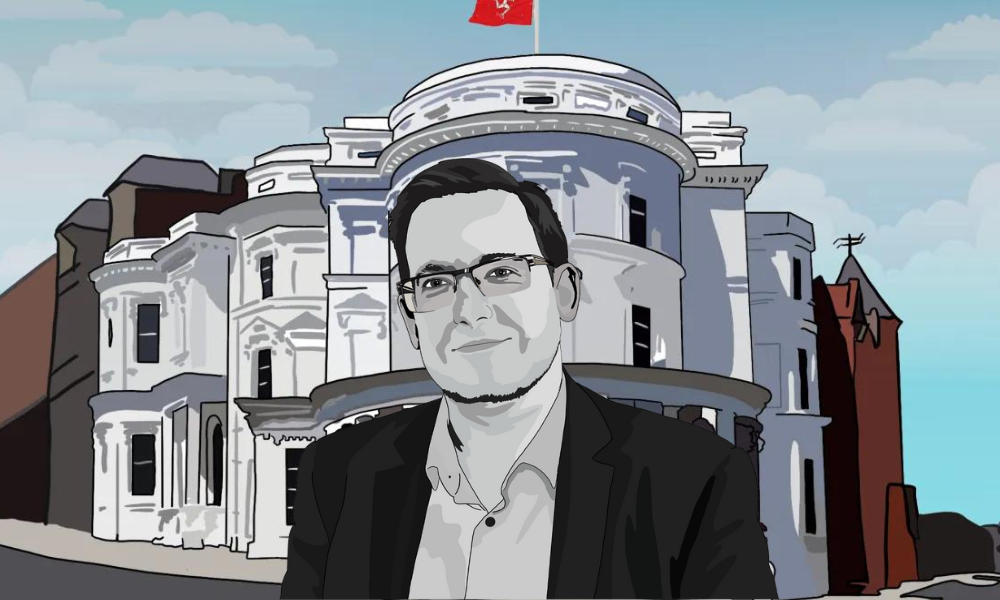
Health and Social Care Minister Lawrie Hooper’s statement on Dr Ranson:
Echoing the Chief Minister in the House of Keys last week, I would like begin my remarks by offering a sincere apology to Dr Rosalind Ranson on behalf of the Department of Health and Social Care for the way that she was treated by the Department.
I also wish to underline at the outset a point which has been made on a number of occasions previously, namely, that the Department fully accepts the Liability Decision of 11 May 2022 and has not at any time sought to go behind it.
This liability decision raised a number of queries around disclosure which necessitated further enquiry but there would always have been a hearing around remedy, irrespective of these concerns, and I will cover both of these points further on.
These proceedings – the disclosure and then the remedy hearings – were conducted within the parameters which were set quite clearly by the original Liability Decision and the Department has fully respected them throughout.
Honourable Members are well aware of the level of public interest that these proceedings have attracted and that, as DHSC Minister, I have been unable to talk publicly in any detail about the Department’s involvement in them. I can assure Honourable Members that these constraints have left me as frustrated as you have no doubt been.
Although the time for appealing the quantum decision has not yet expired, I think that it is important to use this opportunity to place on record the approach that the Department has taken since the Liability Decision was issued in May 2022. I also want to use this opportunity to confirm to Honourable Members that the Department will not be seeking to lodge an Appeal to the High Court. The Department would like to thank the Tribunal for their balanced consideration throughout the remedy process.
I can also confirm that the Department has put the necessary steps in place with Treasury to process the payment to Dr Ranson and has made a proactive approach to her legal representatives in relation to the costs award in an effort to expedite satisfactory resolution.
Honourable Members, it is clear that an enormous amount has occurred over the past two years, since April 2021 when this employment case was first filed, and there is no way in which this statement can adequately cover all the events in sufficient detail. Accordingly, I shall focus my comments today on events since the liability judgment was published last year and do not seek to cover the liability hearing or the matters leading up to in any detail save for factors which are relevant to the remedy hearing. The failings during the earlier stage of the litigation have been aired publicly by the Tribunal in both its substantive judgments and, on a more routine level, as many of the key decision makers are no longer in post and I wasn’t around for the majority of this element there is a practical obstacle in the way of me explaining these events with the same degree of confidence.
Similarly, Mr President, my comments are not intended to be a comprehensive response to other public statements or comments which Honourable Members may have heard so they should not be viewed as such. This statement may not cover everything Hon Members may wish to know and I am happy to take questions and to try to answer them to the best of my ability.
Mr President, I intend to focus my statement around four main areas: the potential to settle the claim together with the final quantum; issues around disclosure including the Expol investigation; the appeals to the High Court; and finally some reflections on the overall conduct of the case since May 2022.
Attempts to settle/why did the Department pursue the matter to a remedy hearing?
What I am in a position to confirm is that there were attempts prior to the remedy hearing in January 2023 to try and resolve the matter. I can confirm that as well as being dealt with via correspondence, a meeting was held, with the intention of trying to reach a settlement; however, as is now evident, this was not possible.
When thinking about settlement it is worth outlining how any sum of money would be calculated, and the challenges this laid down in being able to negotiate a settlement.
The core element of any remedy would be tied to the annual salary amount being claimed. Until only a few days before the remedy hearing, Dr Ranson’s claim was for an annual salary of £350,000.00 (which represented a 75% increase on her previous salary). On the 11 January 2023 the claim was reduced to £229,000.00 per annum (which was still £29,000 per annum more than the Tribunal finally settled on).
In purely financial terms the difference between the figures is significant – had the original position put forward been accepted, the final gross award would have been, over double at over £7m [Gross £8m] rather than the £2.5m [Gross £3.2m] that the Tribunal ultimately determined was appropriate. I’m sure Hon Members can see the difficulty inherent in reaching a settlement when the amount being sought was so high in comparison to what the Tribunal finally determined was a fair level of compensation, which ultimately was much closer to what the Department viewed as reasonable and what its legal advice clearly stated.
Mr President, for the avoidance of doubt the argument was not about the principle of whether Dr Ranson was entitled to compensation – following the Liability Decision in May 2022 it was always accepted by the Department that a payment would need to be made for financial and non-financial losses. It was also always understood that that award was likely to be significant and indeed the Department’s view as submitted to the Tribunal was the eventual total would be in the region of where the Tribunal eventually ended up.
Appeals to the High Court
Mr President, there has been considerable comment made about the two appeals to the High Court last year. From the outset I want to emphasise that neither appeal was against the original liability judgment – which the Department accepted and has never challenged. Both appeals were against actions taken by the Tribunal and were not in any way appeals aimed at Dr Ranson.
Turning to the first appeal, which was primarily on the issue of legal privilege, I will try and outline some context from the Department’s perspective, noting of course that I was not in post as Minister at the relevant time, which limits my ability to fully explain the thinking around the final decision-making.
Due to the nature of the appeal, and in particular the focus on evidence being sought from an individual within the Attorney General’s Chambers regarding issues of disclosure, it was considered that Chambers were now conflicted. From that point, it was necessary to seek external legal advice and Callin Wild were instructed.
It is a complex picture, but ultimately the purpose of the first appeal was twofold. Firstly (and at the outset primarily) to put beyond doubt that the Tribunal should not be able to require a legal representative to waive Legal Professional Privilege; and secondly to question whether as a matter of law, that individual was in any event the correct person to answer the questions which the Tribunal had asked. Following the filing of the appeal, in their order of 1st September 2022, the Tribunal confirmed they did not intend for LPP to be waived.
As such, the sole remaining focus of this Appeal was the question of whether the Tribunal had been wrong as a matter of law to require the legal adviser to the Department to give evidence for the purpose of enabling the Tribunal to consider issues of quantum, disclosure or costs. Proceeding to have this issue settled by the High Court was very much a judgment call.
The focus of public interest has been around this decision to proceed to Court with the filing of the skeleton arguments on the 28th September. I can confirm that the decision to file the skeleton argument was made by Officers in the Department using powers properly delegated to officers from the Minister under the Government Departments Act 1987. The Minister, whilst being involved in correspondence around this decision, did not make a decision around filing the skeleton arguments, necessitating action being taken in his absence by those properly delegated by the Minister to do so.
However, filing of the skeleton argument is not the same as deciding whether to withdraw from the appeal. Having filed the skeleton argument, there was still time before the hearing for a decision to be made on whether to continue with the Appeal – and it was open to the Minister at any time in the following 8 days between filing the skeleton and the appeal hearing, to withdraw the appeal should he have wished. As Honourable Members know, the appeal was not withdrawn; this was a decision in the hands of the Minister.
Following the conclusion of the Appeal, there were no further enquiries from Dr Ranson’s legal team for any further information from the Department’s legal advisor beyond that which had already been provided. To this end the Appeal served its purpose – however I accept that the decision to proceed to Court could be criticised as an unnecessary final step and although I am not able to comment on why the then Minister chose not to withdraw from the appeal I would caution against viewing things with 20/20 hindsight.
Now turning to the second appeal – which rather confusingly was heard before the first appeal on the 26 August 2022.
This was much broader in scope and was lodged following concerns being raised as to whether the Tribunal had stepped outside of its jurisdiction by embarking on an “investigation” into issues of disclosure. The key point being that the Tribunal’s role, following the liability decision, was to receive from the parties any further evidence relevant to the remaining question of remedy and costs. There were real concerns that the Tribunal was of its own volition undertaking an investigation into the adequacy of the disclosure process in order to, in their words “prevent a miscarriage of justice in any future case involving any Government Department”. The view was taken that the Tribunal had no such power to self-direct such an enquiry.
It is the case that the High Court dismissed the Appeal and concluded that the Tribunal had not stepped outside of their jurisdiction albeit they were of the view that the wording used by the Tribunal was “unfortunate”. The High Court also made it clear that it was no part of a Tribunal’s role to try to prevent miscarriages of justice in future cases. This High Court decision was set out in such a way as to emphasise what the scope of the Tribunal’s jurisdiction was and explicitly linked the issue of disclosure to the outstanding issues of damages and costs.
The benefit of this determination was two-fold. Firstly, at the August 2022 Disclosure Hearing, the issues considered were properly limited to matters relating to costs and the overall quantum of the claim. But more importantly, the Tribunal’s Remedy Decision this month specifically referred to the outcome of this Appeal and that in his Appeal Judgment, the First Deemster
“had cautioned against the Tribunal taking on too much of an investigatory role”.
As an aside, and I shall come on to this next, the Tribunal referenced this as their reason for caution in deciding not to use its own initiative to require the attendance of the authors of the Expol Report for cross examination on its contents and conclusions. Although the Tribunal did highlight that it was open to either party to call Expol as witnesses for cross- examination, and noted that neither party chose to do this.
Disclosure/Special Disclosure Hearing/Expol investigation
Turning to the disclosure hearings
The shortcomings in disclosure was a key feature during the Liability part of the proceedings and as Honourable Members know, the Tribunal pulled no punches in its May 2022 Decision.
Subsequent to this, and following on from the short Disclosure Hearing in August 2022, both parties agreed that there was no need for a further disclosure hearing in November 2022 and most of the disclosure issues which had previously been raised had apparently by that point been resolved.
However – given the serious concerns raised during the liability process the Department commissioned an independent investigation into the alleged ‘concoction’ of documents to be undertaken by two well-respected and established local companies: Expol and Reila Cyber Security.
Terms of reference for this investigation were shared with the Tribunal and with Dr Ranson’s team in July 2022 and the Department would have readily looked to amend them had any concerns regarding independence or scope been raised at the time – but no such concerns were raised.
The Report was provided to the Tribunal and all legal teams as soon as possible after it was received by the Department on 30 November 2022 and it was open to Dr Ranson’s legal team to call whichever witnesses they wished, including Expol and Riela, to give evidence and be cross examined under oath. They chose not to do so and no evidence was presented to the Tribunal to challenge the commissioning or outcomes from the report.
The Remedy Decision summaries this position towards the end of the judgment wherein it also states the Tribunal’s hope and expectation that the issue would have been tested and resolved.
These points are important to make because of the conclusion which Expol reached. The allegations were that documents had been ‘concocted’. Expol concluded that:
“There is no evidence whatsoever”
to support this allegation. The Report did find that administrative errors had been made – which I don’t believe should be surprising in the midst of an unprecedented global pandemic – but the independent investigation concluded that ‘there is no suspicion of criminality in the actions of those involved and I must therefore conclude that the documents…. have not been ‘concocted’.
I read these conclusions to re-iterate that, as per the Tribunal Decision, the claimant “did not set out any reasoned attack on the conclusions and gave no evidence to expand on her rejection of any of the conclusions”.
Lastly Mr President I would like to offer some reflections on the Conduct of Case since May 2022
The publication of the Remedy Decision at the beginning of the month has rightly brought the whole matter to the forefront of public consciousness. As the Chief Minister outlined in another place, this Government put in train a number of initiatives as soon as possible after the publication of the original Liability Decision a year ago, in May 2022. This month’s Decision restated many of the original critical comments in respect of the Department’s handling of the liability decision, but also recognised the positive way the litigation has been conducted since that unchallenged Liability Decision.
Given the significant difference between what was originally sought – at £7m and the amount of the final Tribunal decision at £2.5m [both figures are net] – it is evident that the claim needed to be tested in the Tribunal, in order that the Tribunal could come to an independent conclusion on all the evidence presented to it and arrive at a fair figure for compensation.
However, just as important as testing the evidence is how this testing is done. The Tribunal was clear that there was ‘nothing hectoring or untoward about the way [the Claimant] was questioned’ by the Department’s legal representative. Moreover, in its closing remarks, it commented that: “The Tribunal would like to place on record their appreciation of the diligent input from both Leading Counsel as supported by their respective legal teams. The spirit of cooperation on administrative issues has led to the orderly process of the Remedy Hearing with the documentation in excellent order”.
Moreover, by way of further context as to the approach taken by the Department, as noted by the Tribunal, the Department did offer an interim payment of £200,000 – equivalent to a year’s salary – on 12 October 2022. This was not as alternative to final remedy, but rather to cushion Dr Ranson against lost income since January 2022 and in recognition of the impact of the time the Tribunal process was taking.
Concluding Remarks
Mr President, I have attempted to be as open and transparent as I can be with this Honourable Court and I hope that I have explained to Members in as fulsome a way possible the actions of the Department in the months since the liability judgment last May.
I am more than happy to try and answer any questions which Honourable Members may have but I have to say before doing so that no doubt Mr President you will help guide me and others on the issue of any remaining elements of sub judice.


50 Years, Three Generations And Thousands of Windows

Josh Secures £300k Backing For Gaming Venture

Review: ‘Easily Tom Holland’s Best Outing As Spider-Man’

New Hotel Plan for Peel
