
Community
No One Size Will Fit All
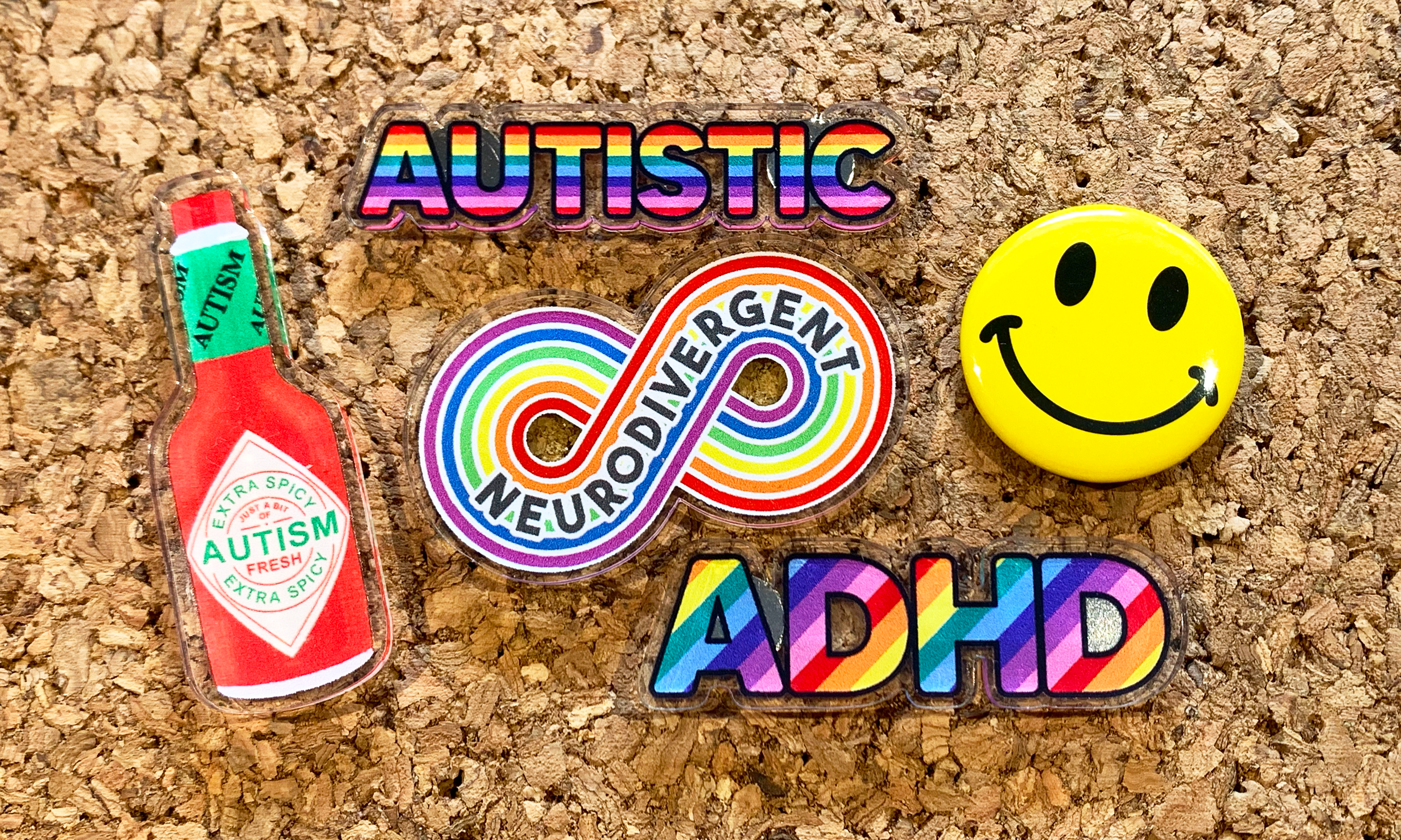
It’s Autism Acceptance Month and I’m back again to talk to you about autism.
You can read my original article HERE if you missed out. Fair warning, it’s quite a long read and this new one is even longer so it’s going to be split into two parts.
Maybe go and make a cup of tea and take breaks if you need them, remember it’s a marathon not a sprint.
In part one we’re going to be looking specifically at autism in kids, what it’s like when autistic kids start high school and what you can do as a parent or teacher to make things easier. In part two we’ll then look at what happens when autistic kids grow up to become autistic adults and join the workforce.
For reference: I was diagnosed with autism in 2015 aged twenty-four and in with ADHD in 2022 aged thirty-one. Since receiving my diagnosis I have spent the last eight years studying as much as I can about autism, neurodivergence and autistic psychology. I’ve spoken extensively about this online, in print, on the radio and I also give talks and presentations on the topic on island. You may have even seen me give one of these talks but if you haven’t and you would like to invite me to come to your business or organization to talk about autism, please get in touch. I’m aware of some other people on island already offering this sort of service or training BUT if they’re not autistic themselves or working in partnership with an autistic person, then it rather defeats the purpose as far as i’m concerned. The best way to learn about autism is to talk to an autistic person.
Recently i’ve been collaborating with the DHSC engagement team who have been collecting input for the National Autism Strategy, trying to identify some of the main issues and concerns affecting autistic people on island. While I can’t speak for every autistic person, I can offer my own experiences of what it’s like to live with autism in a world that is simply not designed for you. It is a constant uphill battle trying to get neurotypical (non-autistic) people to listen to autistic voices, which is ironic seeing as it’s the simplest and most efficient way to actually help autistic people. If I had a pound for every time a neurotypical person has argued autism facts with me, told me to keep my diagnosis to myself or suggested ways I ought to think/behave/feel then I would probably be able to actually afford my ADHD medication.
But I digress. I covered most of the diagnostic traits in my last article (particularly pertaining to girls on the spectrum) so today i’m here to talk about autism in children and teens and specifically how the switch from primary school to secondary school can be one of the biggest challenges for autistic kids. This is by no means a given, there’s nothing to say that ALL autistic kids struggle with the change, but in my experience and the experiences of most of my neurodivergent friends both here and overseas, it is an issue and definitely something to be aware of if you’re the parent/guardian/teacher of any autistic kids.
I get a lot of messages and emails about autism, people tend to ask me questions about my own diagnosis and experiences living with autism as well as advice and recommendations for books and resources on autism. I mostly get emails from women seeking their own diagnoses and asking for advice on how to go about it, but I also get a lot of messages from parents/guardians or family members of autistic kids with the same general theme: ‘my child/niece/nephew has recently started high school and they’re really struggling to fit in, what can I do?’.
And my initial answer is… I don’t know. Because every situation is different and it’s tricky to offer advice when you don’t have all the relevant information. Context is always key and i’m often hesitant to start dishing out suggestions but I also don’t want to just ignore this. I keep getting these messages and I know from my own experience what a difficult time it can be. It’s actually what led me to write this article, in the space of about a week I received no fewer than seven emails and DMs from people asking similar sorts of things about their kids or relatives. It made me think a lot about my own experiences at that age and how looking back, it was a major sign that I was autistic but no-one picked up on it until I’d already reached adulthood (hesitant to say ‘until I grew up’ because i’ll never really grow up).
Full disclosure: I am not a parent. I have multiple godchildren (one of whom is on the spectrum) and more young cousins than I can count, but I have no children of my own. So I don’t write this as a parent of an autistic child but as someone who WAS an autistic child and remembers more of their childhood than is probably normal.
Every autistic child will be different. That’s the first and possibly most important thing to remember so i’m going to underline it. Children in general are wildly different and there’s no ‘one size fits all’ approach when it comes to teaching or raising kids and you can’t fit them all neatly into one box either, to think otherwise is like trying to force a square shape into a triangle. But neurodivergent kids are even more different; from their interests, social skills and the way they learn, to how they perceive and experience the world around them.
What is fun for a neurotypical kid might be hell for a neurodivergent one but unfortunately society is mostly skewed towards neurotypicals as the majority or the ‘standard’. So instead of trying to help or offer simple but effective accommodations and adjustments for autistic people, society seems to think the solution is to ‘fix’ the autistic people instead. Good luck with that. For starters, neurodivergent people don’t need ‘fixing’, they’re not broken or damaged, their brains are just wired a little differently. There’s nothing to cure, no magic pill or trick to making them ‘normal’, there is nothing ‘wrong’ with them, they’re just different
Nowhere does this disparity become more apparent than at high school. At primary school you can chalk most odd behaviour up to a child being eccentric or quirky. Let’s be honest, kids are weird! All kids, not just the neurodivergent ones, children are strange and wonderful little creatures, it’s part of their nature. As children we are often actively encouraged to stand out and be ourselves, but as we get older these ‘rules’ start to change. At high school standing out can suddenly be a bad thing, it’s something to be ridiculed and a reason to be picked on. Bullies will pick up on anyone inherently ‘different’ and make them suffer for it, for being themselves.
It’s actually ironic that some doctors are so bad at identifying autism in children when you consider how good other children are at figuring out who’s autistic when they’re looking for someone to pick on. Shoutout to the kids who bullied me at school for figuring out I was autistic before I did. At the time we didn’t know I was autistic and had ADHD, it would have explained SO MUCH but we didn’t know. I didn’t know. I just thought I was broken so I tried to fit in but most of time the students (and teachers) just picked up on the fact that there was something inherently ‘other’ about me, and they didn’t like it. So they didn’t like me.
There’s no real quick fix for this either which is why i’m hesitant to reply to many of the emails I get about this topic. The only real ‘fix’ I ever found was to mask everything about myself deemed other in an attempt to blend in and avoid the bullies. I had to effectively alter my entire personality and project what I thought was expected of me, a persona that I adopted each day for school to try and ‘fit in’. If that sounds horrible or messed up that’s because it was, it still is. That’s the thing, when you do this every day for decades on end from childhood onwards you start to forget who you really are, you lose the ability to ‘switch it off’ and be yourself. Not receiving an autism diagnosis until adulthood means spending your entire life doing things that make you uncomfortable or trying to conform to avoid being mistreated/bullied until you’re so good at pretending and masking that when you do finally get diagnosed, no-one believes that you’re actually autistic.
Studies show that 60-70% of autistic children have been bullied for their differences. This only covers diagnosed children though, I can only imagine what the percentage is for those undiagnosed. When you look at it that way, it makes sense that we would try everything possible to fit in from a young age. I still get people telling me I ‘can’t’ be autistic because i’m creative and outgoing, I have to bite my tongue not to tell them it really isn’t the compliment they think it is.
If you are concerned about your child potentially being bullied for their neurodivergence whether diagnosed or not, i’m not sure what to suggest as a solution but it’s a good thing that you’re aware of it and taking notice. Every school will have bullies by the way, that’s just a fact of life, all that will vary is the severity of their bullying so maybe it will just be mild name calling and teasing instead of physical violence or psychological abuse (yes i’m speaking from experience here). It may spark some discomfort but when I refer to bullies at school, I don’t just mean other students. Some of the worst bullying I experienced during my own schooling came from teachers, sad but true.
So what can you do as a parent/guardian, relative or teacher to help? First of all, and this may seem obvious but i’ll say it anyway, please don’t be a part of the problem. It’s so easy for adults to chastise any behaviour that they perceive as ‘wrong’ even if it’s something minor. The best thing you can do to try and understand autistic kids (and adults) better is to listen to them. I know, it really is that easy, who’d have thought. If an autistic child (or adult) is behaving a certain way or doing something you deem odd, then ask them why. Don’t just assume or think you know based on previous personal experience. Ask them. Easy peasy. If they can’t quite explain or express why, be patient, take time to observe and work from there.


Do they act this way when they’re happy or sad? They could be stimming. Autistic people can stim when they’re happy or excited, flapping their hands, making noises or spinning. They can also stim when they’re sad or upset, rocking back and forth, picking at their skin, humming, covering their eyes or ears, everyone copes differently and some people need to stim to deal with emotions or situations. By forcing them to stop you could actually be making things worse. Bottling everything up is never good but for autistic kids it can result in an eventual meltdown that will be far worse than letting them get the often harmless stims out of their system to begin with.
Does their behaviour change when they meet new people or have to go near a crowded area? They might be overwhelmed. Sensory overload can be horrendous and debilitating if someone isn’t sufficiently equipped to cope with it, which most children aren’t. If they don’t like shaking hands or hugging people they’ve just met, don’t force them to do it. If they struggle in crowded supermarkets or shops, let them wear sunglasses for the bright lights or put on headphones to cope with the noise. Heck, I still do both of these things sometimes when i’m out, it can all get a bit much and sunglasses and earbuds are a quick and easy way to take back some control and help me cope.
Are they less likely to act this way if they’re left alone? Some children love to work in groups and teams and are never happier than when surrounded by friends or other kids. Some children absolutely hate this and would be far happier to be left to their own devices to sit and read or play alone in a corner. To extroverts this sounds awful, like something they need to fix or correct but to an introvert it’s bliss. Take time to see whether or not a child works better alone on certain projects. Teamwork is important and should definitely be encouraged but some people never learn how to work alone (the pandemic and lockdown proved this) so it isn’t always a bad thing if someone doesn’t want to work in a group or team all the time.
Is their behaviour hurting anyone? So they sit weirdly in a chair when they read or they line up their toys in a row when they play, you think it’s odd and try to correct the behaviour but are they actually hurting anyone? If the answer is no then ask yourself whether it’s worth trying to stop them. Maybe they need to change position when they sit for too long, or they tap their fingers to help them concentrate. Is it stopping them from engaging? No, then let them carry on. I still take a fidget cube with me to meetings sometimes because if i’m having trouble focusing, it can give my hands a distraction while I sit and listen. It’s unobtrusive and it actually helps me focus better on what’s being said.
However, if their behaviour is destructive or actively disrupting those around them, you should absolutely try to stop or correct them, but be very conscious of how you go about it and most importantly, try to find out what caused the behaviour in the first place. If their stimming is disruptive then calmly and patiently explain that to them, suggest other ways they might stim without disrupting the class or kindly take them out of the classroom for a moment. But don’t make it a punishment when they haven’t actually done anything wrong. Again context is key, apply logic to the situation and determine the best option to proceed with. Assume positive intent, and try to understand what the cause of the behaviour is, so that you can work with the child to remove the cause if the behaviour isn’t appropriate/sustainable. Be patient. If your gut reaction as a teacher is to just get mad and yell or kick a child out of class then I hate to be the one to tell you this, but maybe you’re in the wrong profession.
Remember, there’s no one size fits all approach to this, you have to tailor it to each individual. And if you do deal with a child or student who exhibits neurodivergent behaviour (whether or not they’re diagnosed) the best thing you can do is listen and ask them what you can do to help. Usually the solutions can be very simple things, easy accommodations that most adults and teachers can make without too much trouble. These adjustments can often be beneficial to neurotypical kids as well so it’s worth taking the time and effort to learn about any small changes that might help neurodivergent students.
So what do we mean when we talk about odd or unusual behaviour. Well if you’ve ever spent any time in the company of a child then you’ll probably know what i’m talking about and you’ll hopefully have a basic grasp of ‘typical vs unusual’ behaviours. Neurodivergent kids will be different of course, so for some the behaviour could be destructive and damaging, for others it could be stimming or making noises when overwhelmed or simply a different way of doing something. Different kids will require a different approach. If a child is actively harming other students or smashing equipment, remove them from the situation and try to give them what they need to calm down so you can find out what caused the behaviour and make the necessary adjustments or accommodations to try and limit it happening again.
Do NOT try and touch or restrain them unless they are actively trying to hurt themselves or someone else and even then proceed with caution as you could cause more harm than good. Many neurodivergent kids (and adults) do not like to be touched without their consent, even when someone is only trying to help or comfort them. This is something important to be aware of so use common sense in all situations like this and remember that what works for some people won’t work for others. It’s also important to learn the difference between damaging behaviours and harmless ones, because i’m often surprised at how many adults don’t seem to know the difference and just try to fix any and all behaviours they deem ‘odd’ regardless of whether or not they’re actually problematic.
Here’s an example: I was taking part in a school assembly on island talking about art, there was a young child on the front row who to me, was clearly neurodivergent. They couldn’t sit still and they yelled out answers to the questions, they would thrust their hand up excitedly to ask a question but then blurt it out anyway even if they weren’t called on to answer. They were, in a word, excitable, and they also weren’t really bothering anyone, least of all myself or the other speakers. However, this didn’t stop a nearby teacher from snapping at them and hissing their name every time they got a bit too enthusiastic. And I don’t mean gently chastising them to quieten down or reminding them to try and sit still, I mean a particularly vicious hiss of their name every few minutes whenever they moved or called out an answer, which was honestly far more distracting to me than anything the child was doing.
I’m not a teacher or a parent but I am autistic and this approach to dealing with the child really irritated me. I can absolutely see why the teacher thought the child was causing a distraction or a bother but the rest of the children around them were completely unfazed (no doubt used to it) and the speakers weren’t bothered either, the only person who was bothered was the teacher. Remember that thing at the start about how every child is different? Well it’s true. Some kids can sit still and listen attentively and be quiet, some kids can’t. Some kids need to wriggle and fidget and stim to cope with stuff. Some kids don’t quite grasp the unspoken social rules or cues that everyone else seems to just know and they don’t always get when it’s their turn to speak or when they should or shouldn’t answer/ask a question. They aren’t necessarily acting out or deliberately trying to cause trouble, to punish them for behaving this way without understanding why they do it is pointless.
Whether you’re dealing with an autistic child, teen or adult it’s important to try and focus on the positives. Instead of dwelling on what they can’t do, focus on what they can. Instead of trying to change them to fit a certain mould, embrace their differences and encourage their special interests. All children are different, autistic children even more so, stop trying to make them fit in the way you think society expects them to when they were clearly born to stand out.
About Jade
Jade is a Manx artist and designer. You may have seen some of her designs for local companies including: the Manx Museum, IOM Creamery, Castletown Commissioners, the Gelatory, Moonlight Discotheque, Mischief and Isle of Pride. She also runs the Candy Doll Club, an online business selling products featuring her designs to customers all over the world. Jade is also a member of the Isle of Man Arts Council.
Art – www.jadeboylan.com
Shop – www.candydollclub.com
You can find more info about the gov’s Autism Strategy by clicking here.


You must be logged in to post a comment.