
Trailblazers
Gef’s 30 Under 30 2024 Winners: Q&A with Georgia Foxton
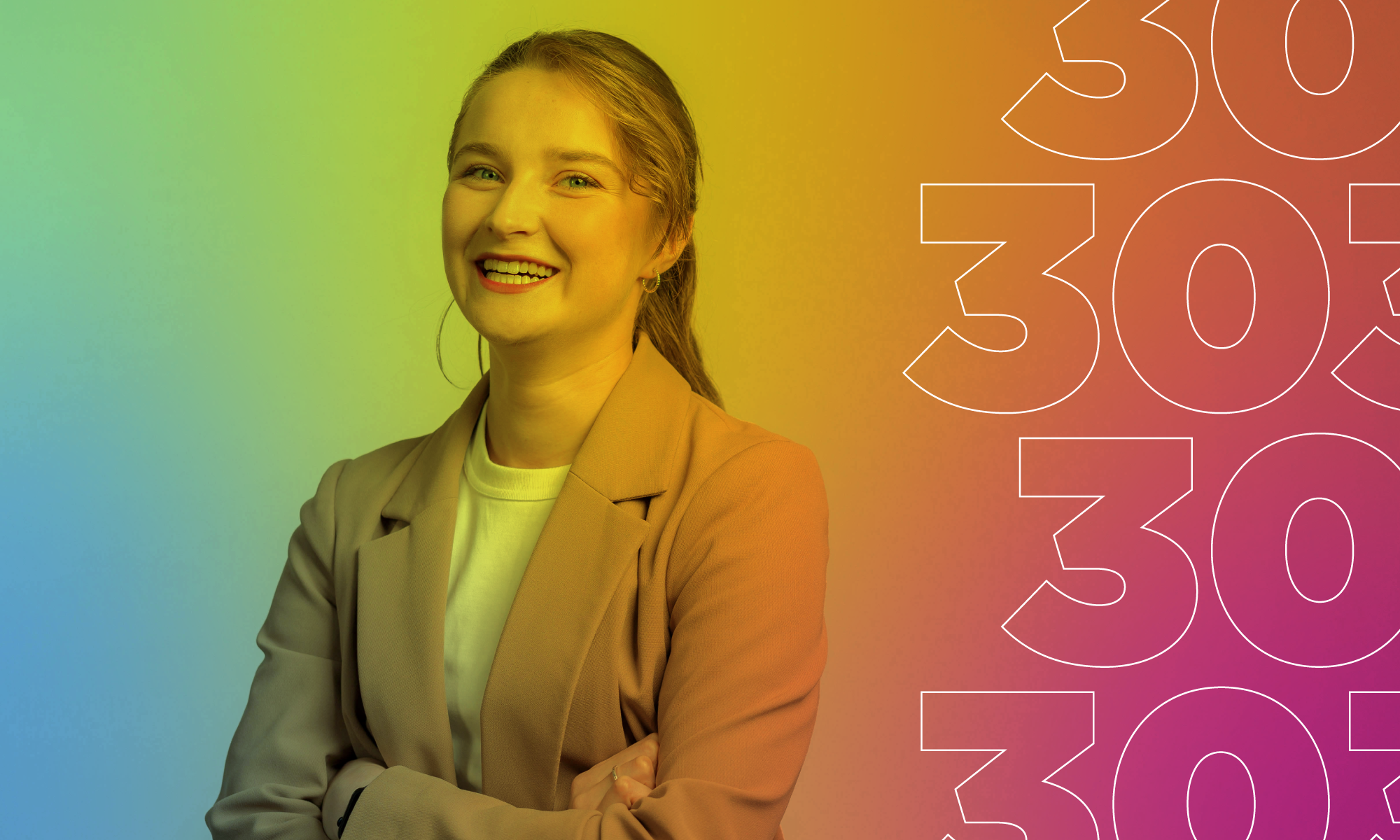
Ten categories. Thirty young visionaries making their mark on the Isle of Man. Introducing the 2024 #Gef30Under30 winners: the next generation of our island’s leaders.
The Love Tech Trailbazers category winners are one of a kind. They glanced at the beaten path and chose to go their own way.
What is your name and age?
Georgia Foxton, age 23.
Job title or role in the community?
I’m an Actuarial Trainee at Zurich International, and I’ve been in this role for four years. Alongside my ‘day job’, I’m also one of the Co-Founders and Chair of the Pride Committee at Zurich International.
How did you start your career or role in the community?
Growing up in a large family, everything was always centred around fairness. For us, fairness meant that everyone got what they needed but also that we were all treated equally.
It was this strong sense of fairness that became the foundation for a lot of my work. It was after two of my siblings came out and chatted to me about their experiences (e.g. witnessing and experiencing homophobia, feelings of exclusion, struggles with mental health) that I realised that our society isn’t quite so focused on fairness as it probably should be!
In order to get a better understanding of their experience, and how I can be a better ally, I read the book “We Can Do Better Than This”. In this book, 35 people – from actors and musicians to artists and activists – explore how we can shape a better world for the LGBTQ+ community. It prompted me to reflect on how actively inclusive my working and living environments were.
After considering all of this, I decided to approach the HR team and executives at Zurich to see if there was more we could do to actively promote inclusion in our office. After talking openly about inclusion in the workplace and running events internally, I had the opportunity to co-found Zurich’s internal Pride Committee with my local HR rep. Since its founding, we’ve created a training programme that educates our teams on important LGBTQ+ issues – it educates colleagues on the importance of respecting pronouns, different sexualities and gender identities, and how they can show allyship in the workplace. The training gives people the opportunity to ask questions in an accessible, open-minded, and safe forum.
In one sentence, summarise your journey so far as a young and successful person under 30.
It has been a journey of finding inner confidence to speak out on subjects that some people considered taboo in the workplace, and feeling empowered that as young people we can be the driving force in creating a future we’d be proud to be a part of.
Tell us about your business/industry, is there something interesting about it that most people wouldn’t expect?
Something most people wouldn’t expect is that LGBTQ+ issues affect everyone! Running training sessions and raising awareness for inclusion in the workplace has really highlighted to me that more people than you know identify as part of the LGBTQ+ community or are friends/siblings/parents/family of those directly affected by these issues. This is why I think it is so important to encourage active allyship and support; it is not the responsibility of the LGBTQ+ community to educate and fight for rights – everyone should.
Have you experienced any hurdles in your career or community efforts and if so, how did you overcome them?
In the early stages, speaking out about LGBTQ+ rights and inclusion in the workplace was met by tumbleweed. People were reluctant to say anything on the subject. I found that often people would rather say nothing because they were worried about “getting things wrong”.
This fear of failing as an ally, and the inability to act that comes as a result, is not unusual. However, I think being passive can be just as destructive as outright discrimination. A certain way to fail at being an ally is to do nothing at all!
I feel very lucky that, as a committee, we’ve been met with great support and enthusiasm from our Executive Directors, particularly our Committee Sponsors. With this support and backing we have continued to roll out events and training sessions, and engagement has continued to increase the more we talk about the subject.
Tell us about why you think you won the category you did?
I feel incredibly honoured to have been named a Trailblazer. I think I’ve ended up winning in my category because of the impact of the Pride committee and our training programme. A ripple effect of this work has been that people feel more confident to be completely themselves in the workplace, and not only that but they are also championed for doing so. Work takes up a lot of your time and life, and it can be incredibly difficult if you feel like you can’t be your full self.
Who are your role models, either on-island or off, in your sector or outside of it?
My role models are the team I have around me in the Pride committee. It was a massive leap of faith to set up this committee and to have my colleagues trust me with something so personal to them is not something I take for granted.
The hate and discrimination they have personally gone through, and the strength they have shown to still stand up and shout for LGBTQ+ rights and inclusion is so powerful. It is an honour and a privilege to know them and work with them.
What’s the best piece of advice you’ve ever received?
I think the most simple yet powerful piece of advice I’ve ever received is to “trust your gut”. In times of uncertainty and/or change, I’ve found myself questioning things the most. During these times I have remembered this advice and, on reflection, followed a path that suited my inner purpose and truth the most. I think if I’d ignored my gut feelings I would have ended up on a path that doesn’t fulfil me and doesn’t resonate with my true passions and beliefs.
What do you wish you knew when you were getting started in your career?
It’s ok to ask questions and lots of them! You’re not stupid for not knowing things or questioning the norm, most of the time you are not the only person who doesn’t know. I also wish I knew that not being perfect was ok – the greatest growth and learning comes from embracing failure instead of fearing it.
What are your plans for the future?
My plans for the future are to continue actively using my voice to encourage and support inclusion in the workplace. I am proud to have been an active driving force to changing corporate culture and creating opportunities for others to have a voice, but more needs to be done.
Although most (if not all!) corporate workplaces have policies in place in line with the Equality Act, I feel as long as there is hate, discrimination, and misinformation on LGBTQ+ topics, more activism is needed to ensure that everyone feels celebrated and accepted to be their true selves in the workplace.
What changes do you hope to see in your sector or community in the coming years?
I would love to see in the future no need for D&I committees/forums because everyone feels empowered and equality rules. However, there is still some work to be done before we’re at that point!
In the meantime, I think representation and education is hugely important as there’s a lot of misinformation out there. LGBTQ+ rights are human rights and there’s a huge difference between active change and passive policies. I think it would also be beneficial for us to start taking more intersectional approaches to our work/activism – to acknowledge that everyone has their own unique experiences of discrimination and oppression. It’s important that we consider everything and anything that can marginalise people – gender, race, class, sexual orientation, physical ability, etc.
What, for you, are the benefits of staying on or moving back to the island for young people under 30?
I think a huge benefit of staying on the Isle of Man is that you can have a voice and actively contribute to how future society looks. Being in a ‘small pond’ such as ours can be to our benefit. We can pilot training schemes or develop resources and can see the impact of these things first hand. In a larger space it can be difficult to get initiatives up and running and you don’t necessarily get to see the impact of what you do.
What does being a Gef’s 30 Under 30 winner mean to you?
Being a 30 under 30 winner is an incredible honour, particularly when reading about other current and previous winners – I feel part of a very special group of people!
Like many, I often find myself battling with imposter syndrome. Getting this award has given me the chance to reflect on my work and take time to celebrate my achievements.
Being given this platform to share my story and my journey within the D&I space is also something that I really value. I hope that anyone reading this interview (and the interviews of other winners!) can feel inspired and empowered to take that first step, be that learning more about social justice, signing a petition, challenging everyday microaggressions or pushing for better access and inclusion in their workplace.


50 Years, Three Generations And Thousands of Windows

Josh Secures £300k Backing For Gaming Venture

Review: ‘Easily Tom Holland’s Best Outing As Spider-Man’

New Hotel Plan for Peel

You must be logged in to post a comment.