
Charity
Horses Home Unfairly Dismissed Employee
The operations manager’s evidence was found to be ‘unconvincing’ by the tribunal
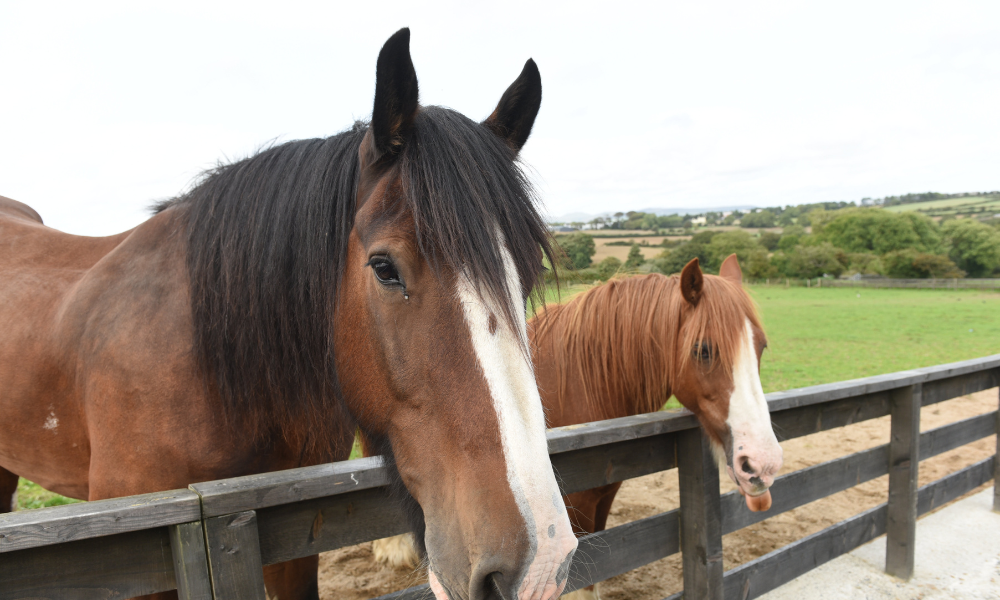
The Home of Rest for Old Horses has been ordered to pay an ex-employee over £8,000 by an employment tribunal
It ruled that David Martin Townend was unfairly dismissed, but that he had contributed to his own dismissal.
Mr Townend took up the job of estate manager on June 8 2020 and on December 2 2022, his employment contract was updated and on the same day he entered into a service occupancy agreement for a property on the home’s land, known as Bulrhenny Cottage.
Mr Townend’s working experience had been in farming but never with horses. He had no formal induction or training and Jill Moore, the former GM, explained that he learned ‘from the boys’.
However, although entitled to move in, he had not done this with his wife and family by the date of termination of his employment on March 13 2023.
The tribunal said: ‘This was because the premises were being decorated and got ready for occupation and also because Mr Townend would not move in until the internet had been provided. By the date of termination, he had in fact moved in some belongings and some furniture had been purchased.’
On the day he was due to move into the cottage, he was asked by a director, Rodger Clague, to attend a meeting at the charity and was provided with a letter suspending him based on an allegation of “negligence resulting in unacceptable loss or risk of injury to the animals”.
He was then offered a package of payment of three months’ notice with pay for days already worked for the month plus accrued holiday pay and a reference but this decision had to be taken now and if he chose not to accept, he would face a disciplinary hearing for gross misconduct.
If he lost this, he would have been dismissed immediately and receive no notice payment at all.
He chose to reject this offer and so faced three allegations.
The first being that he left a gate open and had ‘exposed the horses to the risk of being able to exit the premises onto the main Douglas to Castletown A5 road’.
The tribunal added: ‘The second allegation also involved the safety of an animal in the care of the respondent. The evidence on that was that Mr Townend had failed in two respects. It is not good practice to walk past one horse with a bucket of feed to be taken to another. The first horse will assume that the feed is for it and will react.
‘The respondent’s case is that this is what Mr Townend did and a horse called Happy slipped and fell so that Mr Cox, as a veterinary surgeon, had to be called. The second respect in which Mr Townend was alleged to have been negligent was for putting down too small bedding on a slippery sloping surface so that Happy slipped and fell.’
The investigation into this had not cleared Mr Townend of blame but had not found gross misconduct.
A third allegation was upheld and deemed to amount to gross misconduct. On February 8, Mr Townend was said to have driven a JCB through an internal gate, which he failed to close, leaving horses with a direct path through two open gates out to Richmond Hill.
Mr Townend was then dismissed on March 13 without notice or pay in lieu of notice. He was informed he could appeal but chose not to do so as he thought the process had been ‘a sham’,
A witness, named as Mr XZ was said to see this, but later withdrew his statement to the charity after he left its employment, the tribunal said that he had ‘informed Mr Townend that the statement relied upon by Ms Woods had not been his words and there had been some pressure to write what he did in his statement’.
It added: ‘He had gone along with it because he feared for his own job security. In August 2023, he wrote to the respondent that he withdrew his statement.
Despite this, the tribunal found that the evidence of Mr XZ was consistent with that of another witness, Miss Comish, which the panel did consider was credible.
Disclosure
The tribunal found that the original disclosure period had resulting in ‘obvious shortcomings’ and that following an order by chairman Douglas Stewart, a ‘substantial number of further material documents were disclosed’. A further order had to be made and further documents were received two days before the hearing.
Stall
The tribunal also heard from Barbara Cucchi, equine and operations manager at the charity, but found her evidence to be ‘unconvincing’.
Mr Townend questioned Ms Cucchi about a diary note that she made in January 2023.
The tribunal said: ‘The challenged entry was just one of many. She denied “stalling” Mr Townend from moving into the cottage. However, she was wrong-footed on this because she had written this in her diary.
That diary entry read: “Informed Martin (Townend) that the Internet would be another 14 days to install as asked by Rodger to stall Martin from moving in somehow in view of the meeting on the 9th February as Rodger had strong concerns that if Martin was living on site and fully moved in it would create an issue.”
When later questioned by Mrs Blayden, Ms Cucchi suggested there was genuine delay regarding internet installation and her use of the word ‘stall’ had been a grammatical error.
However, while the tribunal didn’t believe the decision had been a ‘sham’, ut did note that there were ‘significant pointers that at least from 30th January there was a plot to ensure that Mr Townend did not move into “his” new home because that would cause problems’.
It added: ‘There was a plot to end his employment but the Incident on 8th February provided just the evidence that was needed to justify a bona fide finding of gross misconduct.’
Judgment
The tribunal said that in its judgment, Mr Townend had not taken proper care when he left the gates open and agreed it could have led to a catastrophic event if one, or more, of the horses had escaped onto Richmond Hill.
However, it determined that a final written warning, as opposed to his employment being terminated, would’ve been a ‘fair outcome’ and ruled that had been unfairly dismissed.
It said: ‘After careful consideration, the Tribunal concluded that much more of the blame should be borne by Mr Townend and considered that the compensatory award (but not the basic award) should be reduced by 75%.’
The award was £30,299.50, with the total being formed of loss of statutory rights, net earnings loss, future earnings loss and the loss of the accommodation.
However, with the 75% reduction, the final ware was £7,574.88.
You can read the judgment in full here.


50 Years, Three Generations And Thousands of Windows

Josh Secures £300k Backing For Gaming Venture

Review: ‘Easily Tom Holland’s Best Outing As Spider-Man’

New Hotel Plan for Peel
