
Community
James Brown Apartments Officially Open as Residents Move in
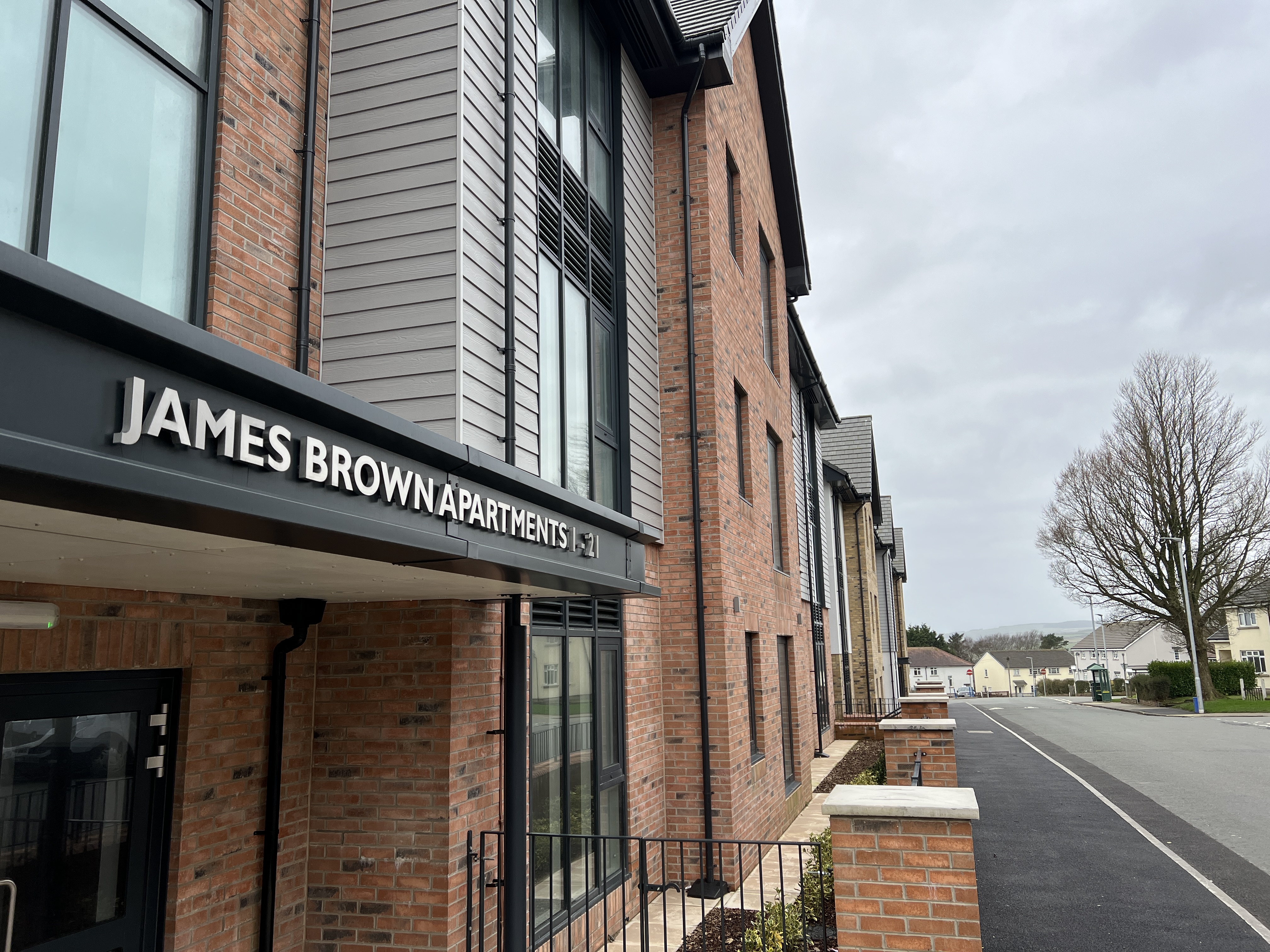
Tenants have now moved into a new £11m social housing development in Willaston, with Douglas City Council describing it as a blueprint for future schemes on the island.
James Brown Apartments on Snaefell Road has welcomed its first residents, delivering 48 energy-efficient two-bedroom flats as part of the council’s regeneration of the area.
Council leader Devon Watson said: ‘We aren’t just building a building here, we’re also building a community.’
Around three quarters of the new tenants had been on the housing waiting list, while the remaining 25% have transferred from other local authority properties, freeing up larger homes for families.
The flats are designed to be light and airy, with views towards the Manx hills or the nearby play park. Each kitchen includes a washer-dryer to prevent damp clothes being dried indoors.
Air source heat pumps provide heating and high levels of insulation mean the properties should remain at around 15°C in winter even without the heating on. Solar panels on the roof power the communal heating system.

The council says heating bills are likely to be around a third of what would typically be expected in an older flat of a similar size.
Weekly rents range from £161 to £165, compared with £125 to £130 in older council flats. However, Councillor Watson said lower energy bills would offset the higher rent.
He said: ‘People pay a slightly higher rent, but their overall bills are much lower because they’re spending very little on electricity.’
He added: ‘We want people to have really decent, affordable accommodation, because decent, liveable accommodation shouldn’t only be for those on the upper end of the pay scale. It should be accessible for everyone. That’s the design philosophy behind this.
‘Some of the conditions people were living in beforehand were horrifying.
‘We’ve gone out of our way to build to the highest standards, integrating modern technology such as solar panels on the roof that power communal heating. Warm air from inside the building is harvested and fresh air is then heated using that process.
‘By reducing people’s energy bills, we reduce reliance on fossil fuels and improve their standard of living. There is no contradiction between high environmental standards and high living standards.’
He said while the project cost £11m to build, between 85% and 90% of that would be recovered through rent payments, and there would also be wider savings to the NHS.
The costs reduce further, he said, as the design life of the complex is expected to be closer to 100 years compared with 60 for a traditional building.


50 Years, Three Generations And Thousands of Windows

Josh Secures £300k Backing For Gaming Venture

Review: ‘Easily Tom Holland’s Best Outing As Spider-Man’

New Hotel Plan for Peel

You must be logged in to post a comment.