
Community
UCM is Making Adult Learning More Accessible with its WBIS Course
Work Based & Integrative Studies gives students more autonomy and flexibility
Sometimes I think advanced learning is wasted on the young. I’m a prime example of it. Growing up in the age of MTV, where the social narrative was that fame was the main aspiration to have and only one that mattered, I went to university straight after high school to study media and performance in the hope of becoming a film star and marrying Shia LaBeouf. I achieved neither of those things. Thank goodness. It’s only now, now that I’m in a job I find interesting that I find myself desperately wishing I’d studied something more suited to what I’ve ended up doing. I, of course, learned loads of useful transferable skills BUT if my degree was in something relevant to my career choice I think getting to where I am now would have been much more smooth sailing.
ENTER UCM. The hero of the hour.
Did you know that UCM offers a way for you to essentially create an undergraduate degree (for those in the know, we’re talking a BA (Hons)) or postgraduate degree (it’s a masters or MBA if you know the jargon) that is bespoke to you, your working environment and your aspirations. It’s called Work Based & Integrative Studies. It’s for people who want to get further qualifications in the profession they’re in. Not only does it give you the flexibility to do the course without having to take time off work to get qualifications, it allows you to create workplace projects, with real organisational benefits, that go towards your degree.
It makes sense really. For so long, we’ve been used to squeezing ourselves into one-size-fits-all university courses, but with WBIS, people have the chance to cater their degree to themselves as individuals.
‘Well chuck my graduation cap up into the air and colour me IMPRESSED. TELL ME MORE.’ I hear you exclaim.
How it works is, at the start, every student does a self-review and negotiation of learning module, where the student reflects on everything they’ve learned professionally and what more they can learn on top of that to advance. The student and tutor then negotiate the aims of the projects for the student’s workplace and the areas they want to develop, then look at the opportunities to do that and any specific knowledge modules they want to ‘integrate’ into degree pathway. It’s a win for the student and a win that’ll leave your workplace bosses rubbing their hands with glee.
Examples of work-based projects students have chosen include:
- Design a Marketing strategy & campaign
- Develop a website
- Assess preparedness of agricultural sector for impact of Brexit
- Improve Customer Experience
- Benefits of Outdoor Play for Nursery aged children
- Market research for new product development
- Effects of school-based diet on heath & wellbeing & physical activity of children
- Improving decision making in high stress situations
I had the pleasure of speaking with the Higher Education Manager at UCM, Gail Corrin, who told me about how this style of learning came to be introduced.
‘We saw the framework at the University of Chester – our partners. Though we have the resources, living on an island can make it quite hard to run courses with low numbers. This format helps solve that problem, and we’ve now been running it for 12 years. People designing their own degree is suited to a small nation, and there’s maximum flexibility for people’s studies across a huge range. Then when it comes to the classroom workshop aspects of the course, having everyone come together from all sectors right across the Island, makes for a very rich learning experience.’
If you’ve got previous qualifications or on-the-job experiences suited to your course, that experiential learning can be applied to claim credits. How good is that? All those years of skills you’ve developed won’t all be for NOTHING just because they don’t fall under a neat degree headline on a certificate. It’s basically all about you. The impersonal ‘bulk project’ style is taken away and replaced with you as the beating heart of the course so you can get exactly what you need from it to advance in your career and in a way flexible enough to make it achievable while working. AND it’s pay as you go, so you can set your own pace. There’s an overall time limit (but it’s generous, so there’s not a big rush) but you can do /pay for modules as and when it suits you.
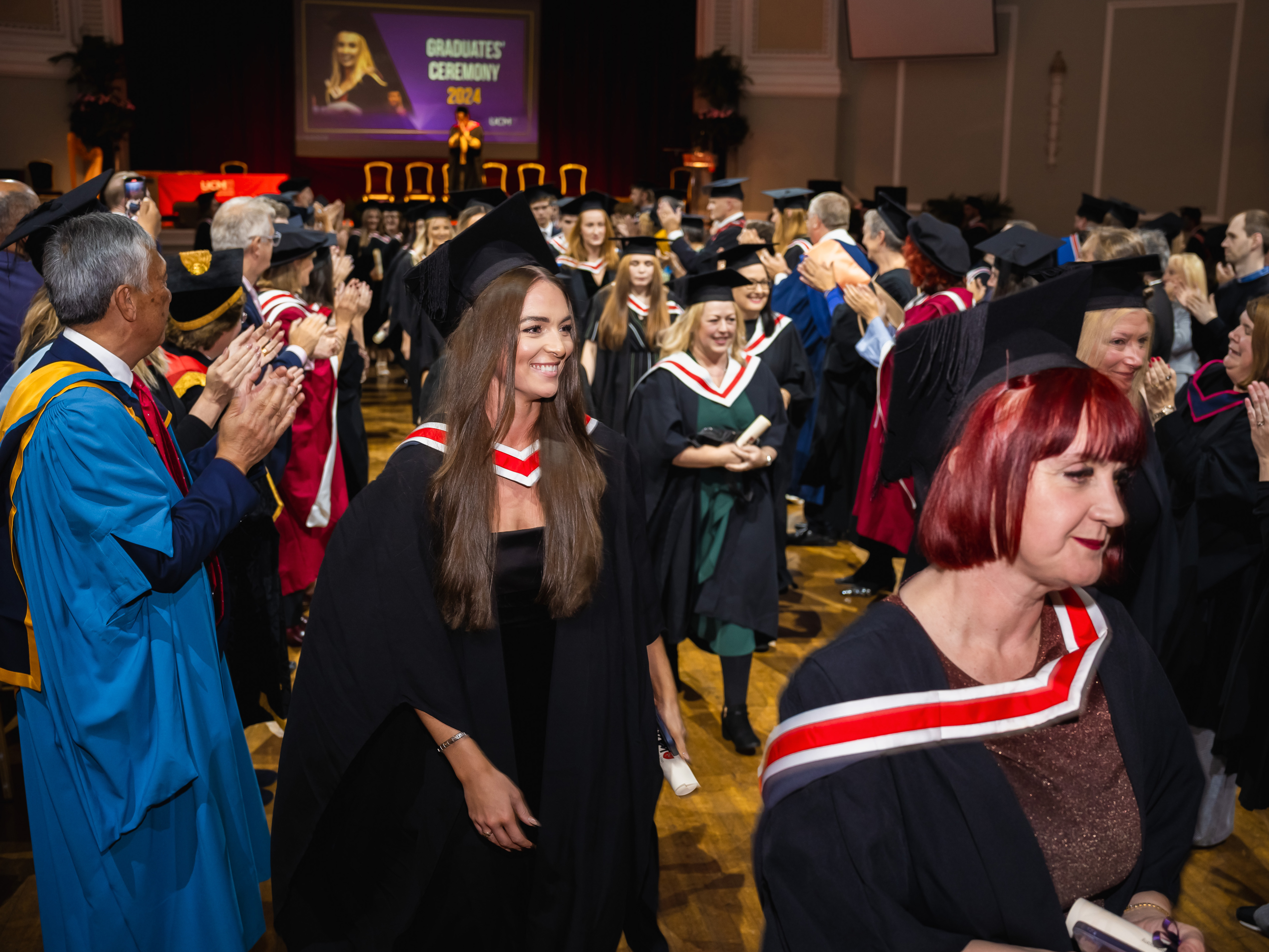
At the recent UCM graduation ceremony, 22 students got their degree through this pathway. I asked Gail how they’d found that style of course.
‘People love the flexibility and think it’s a great way of attaining an undergraduate or postgraduate degree. Working and studying of course takes effort, and this does require motivation from the student but everyone finishes on a high at the end. When students achieve their projects and come out the other side, there’s a real sense of empowerment and ownership with staying on top of their work-based advancements, and it’s a real benefit to their organisation.’
In a time where the workplace is changing constantly, AI is becoming more prevalent, and the nature of work is speeding up, there’s less stability than a foot passenger stood on a force 9 in December. We can no longer rely on a set of knowledge we got years ago that sits gathering dust in your brain. Work Based & Integrative Studies is the common sense move in the midst of the madness. You get work-based learning and official qualifications; the experience-based skills you’ve developed over the years are utilised rather than shunned, there’s flexibility in choices of topics, assessments, and time, and you have personal tutorial support from start to finish.
Want to find out more? EXCELLENT. UCM is hosting an open evening on 14th November – find out more at www.ucm.ac.im.
PHOTO CRED: Matt Mosur
50 Years, Three Generations And Thousands of Windows

Josh Secures £300k Backing For Gaming Venture

Review: ‘Easily Tom Holland’s Best Outing As Spider-Man’

New Hotel Plan for Peel
