
Community
Council’s Plan to Replace Roofs
The scheme is likely to take about a year to complete.
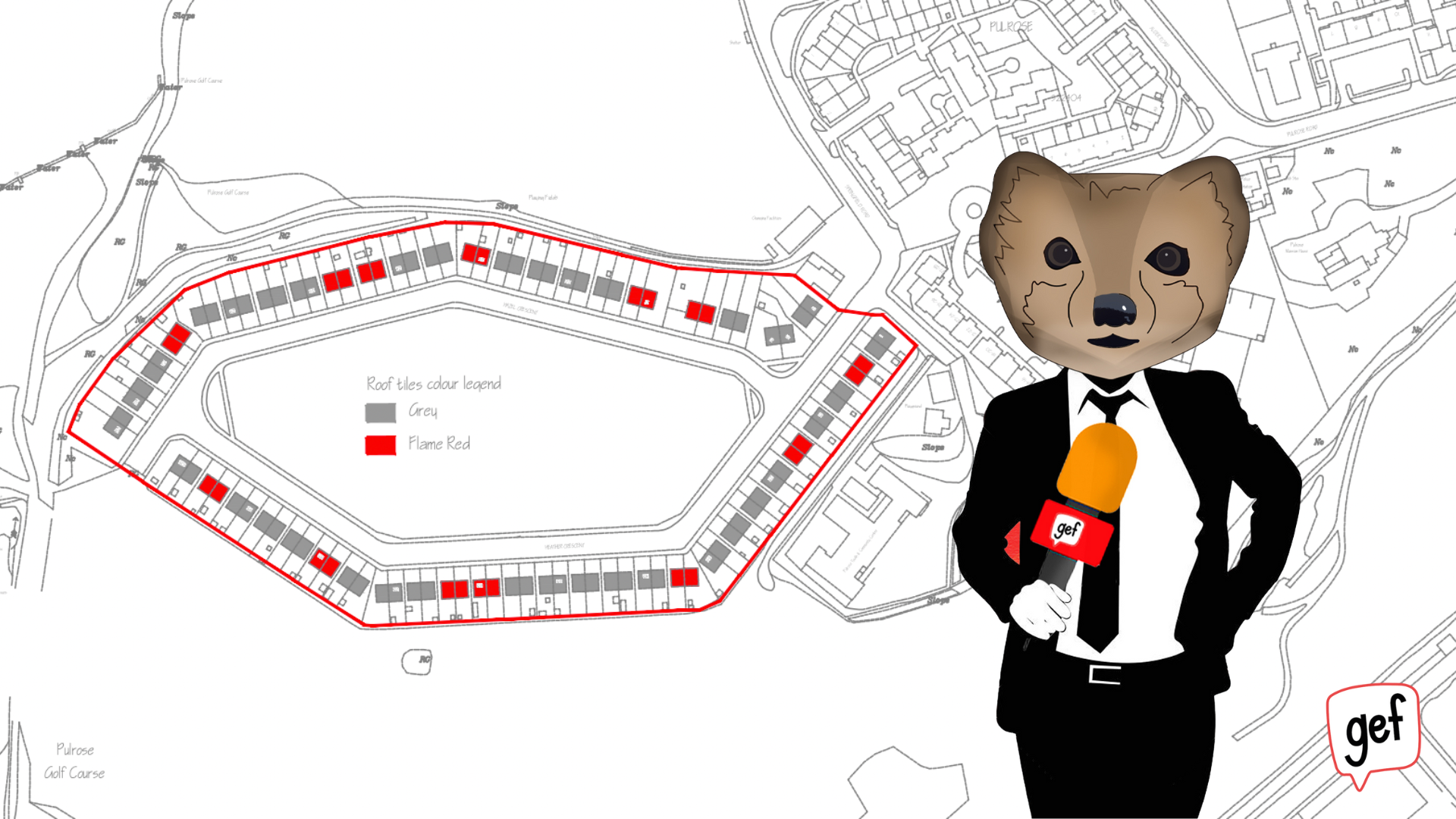
Douglas Council is seeking permission to replace the roofs of 76 homes in upper Pulrose.
The application would see all the homes have their chimney stacks removed and new concrete roof tiles.
The roofs at the 76 dwellings are the original slates secured with lime mortar torching to the underside which has reached the end of economic and physical life. Lime mortar was a traditional method of securing roofing tiles which prevented strong winds getting under the slates and lifting them.
Torching is still practiced in heritage properties as an alternative to modern breathable roofing membranes.
The chimneys are redundant due to the introduction of full central heating systems which is often a cause of damp penetration due to the loss of the heat source.
Housing Maintenance has attended to roofing repairs over several years to maintain the integrity of the roofs as far as possible.
The full project will:
- Remove redundant chimney stacks to below roof level to prevent damp ingress issues;
- Re-roof the dwellings with new ridge, hip and plain profile concrete tiles to replicate the dwellings located at the inner section of Upper Pulrose;
- Salvage existing roofing slates where possible for storage and use elsewhere for housing maintenance whenever required for repairs;
- Install new treated roofing battens on a breathable roofing membrane which has passed a bat snagging propensity test;
- Upgrade the roof insulation to meet building regulation requirements where required;
- Clean existing Upvc fascias and soffit boards;
- Upgrade the integrity of garden boundary retaining walls where required;
- Carry out remedial work to the back edging of footpaths where they abut garden boundaries.
It is currently anticipated that the work on site will take 52 working weeks.
The project is working in conjunction with the Manx Wildlife Trust with regard to roosting bat populations and nesting birds to prevent disturbance and apply appropriate methods of work.
50 Years, Three Generations And Thousands of Windows

Josh Secures £300k Backing For Gaming Venture

Review: ‘Easily Tom Holland’s Best Outing As Spider-Man’

New Hotel Plan for Peel
