
Politics
Demonstrators Gather at Tynwald for Assisted Dying Debate
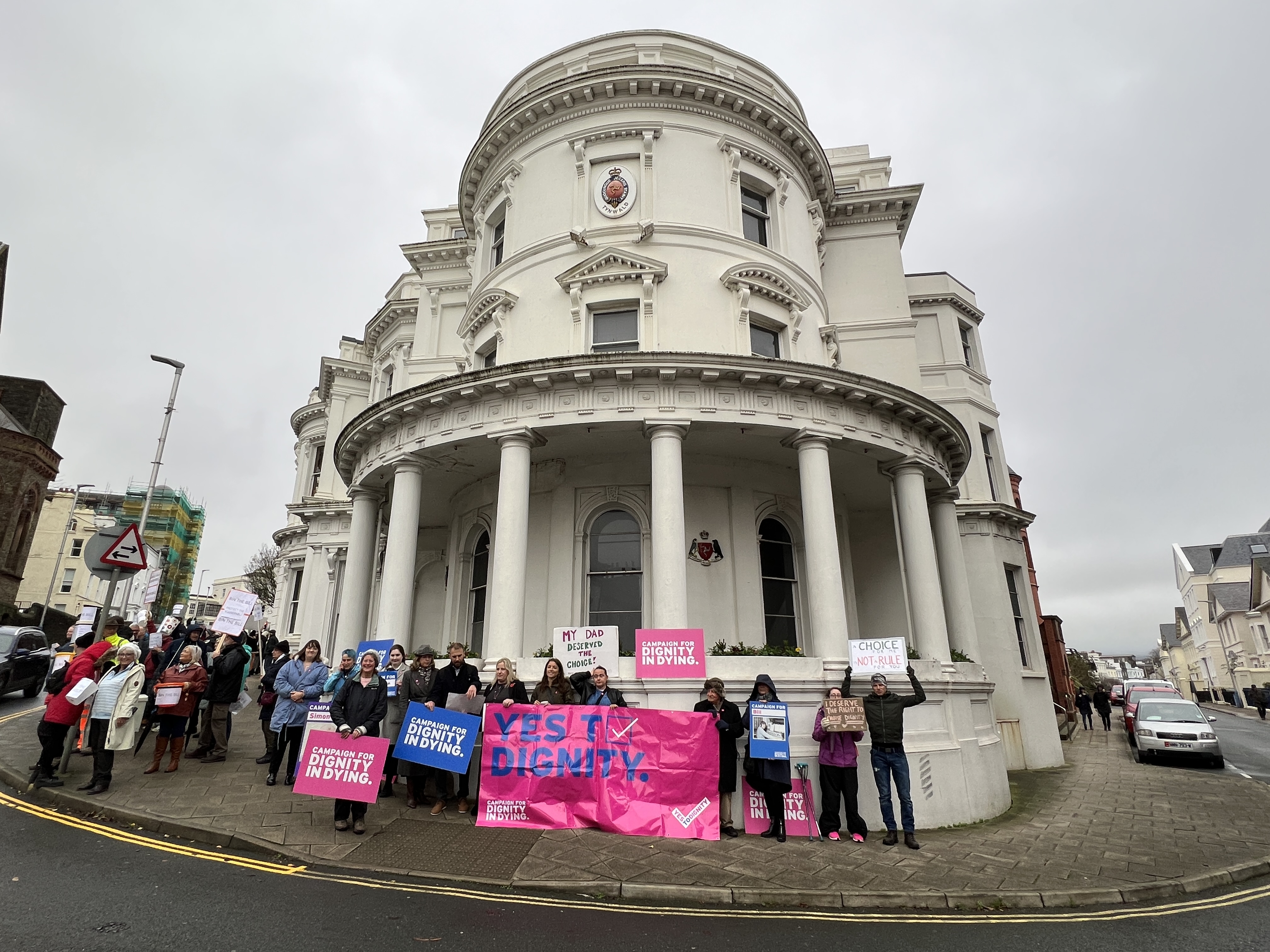
Demonstrators have congregated outside of the Tynwald building ahead of the second reading of the Assisted Dying Bill.
Alex Allinson said that he is ‘cautiously optimistic’ ahead of the second reading of the Assisted Dying Bill.
This morning hundreds of people gathered in front of the Tynwald building with some showing their support, and others protesting against the bill, which will have its second reading in the House of Keys today.
Dr Allinson, who proposed the bill said: ‘I’m cautiously optimistic that today the Members of the House of Keys will vote to take the next step in what is a long process to analyse how we could provide assisted dying for the people of the Isle of Man in a safe, secure way that meets their needs, but also meet some of the concerns and worries by the wider community.
‘I think there’s a lot of people concerned about some of the intricate details of how the law would be brought into play.
‘But what we have got to say in terms of the second reading is the acceptance of the key principles of the Assisted Dying Bill.

‘I think if we can get that through the House of Keys then we can take our time to work through the various ways of how we provide it, with full consultation of the medical profession, the nursing profession and the pharmacists.
‘What we are tasked to do as parliamentarians, is to make sure we craft the legislation in exactly the right way so that we have those checks and balances and safeguards.’
Chief Executive Officer of campaign group Dignity in Dying, Sarah Wotton, believes it is a ‘historic vote’.
She said: There is huge support in the Isle of Man for law reform, there was a poll done on rsidents, which showed that 66% of residents want a law change here.
‘I think people want control andchoice at the end of life, and whilst people know that they may not use the law, having the option is all important.
‘It’s a progressive choice that I think is coming through the world, there are now 26 jurisdictions across the world that are changing the law.’
She added: I think you have got to look at what happens in the absence of these laws.
‘Without the law, you don’t prevent assisted dying, you just prevent safe assisted dying.
‘If it is approved today it would be a historic vote.’
Some protested with bins that said ‘Bin the Bill’ and others had slogans that said ‘I deserve the right to choose dignity’.
Friends, Sabrina Callow and Tony Black who attended were in support of the bill.

Sabrina said: ‘I think that the right for choice is the right we are all born with.
‘Experience with end of life is a brutal thing to have to behold, and if you actually love someone the medication that people are actually given at the end of life completely changes who they are, so you can’t even have conversations with them anymore.
Tony who has experience with end of life, said: ‘By the end it is not about quality of life anymore for those last few weeks or even months, it is just not fair.
‘I witnessed it firsthand and it was way too close to me to ignore it.
‘I would summarise it as my sign says “A choice for me is not a rule for you”.
‘It is an extra option to help many people who suffer a great deal.’

But Stella Harris, who is a Doctor in the island said: ‘I am really concerned to protect the vulnerable people of the Isle of Man.
‘I can understand people campaigning in favour of assisted dying who have had difficult experiences where they have had relatives who have suffered.
‘But I don’t think this bill is the answer, I don’t think this bill is going to stop the suffering, we need to have better care for them, we need more funding to look after people better.
‘We have got a real recruitment and retention problem already on the Isle of Man.
‘A recent survey found that 74% are against assisted dying, and a third of doctors said thay would consider leaving the Isle of Man if the bill was approved.
‘If we lose any doctors, it will be an absolute crisis because recruitment is incredibly difficult and doctors are very concerned.’


50 Years, Three Generations And Thousands of Windows

Josh Secures £300k Backing For Gaming Venture

Review: ‘Easily Tom Holland’s Best Outing As Spider-Man’

New Hotel Plan for Peel

You must be logged in to post a comment.