
Community
It Needs to Work and be Fair
Members will be asked to support a further exploration of a revolution in how we look after those who need care
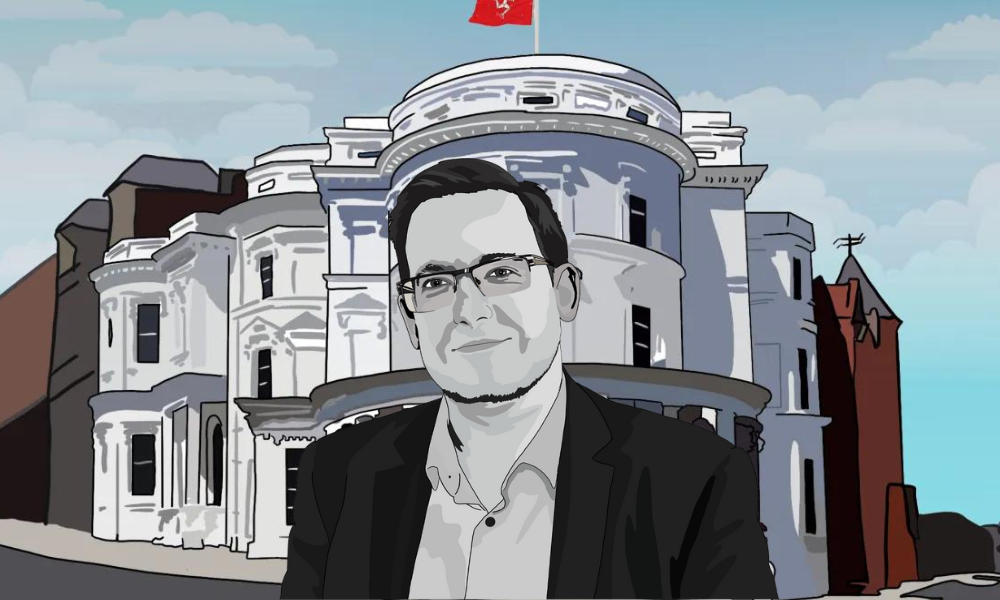
When Tynwald sits today, members will be asked to support a further exploration of a revolution in how we look after those who need care on the island.
We sat down with Health Minister Lawrie Hooper to discuss the proposals and see which model he personally prefers.
‘When this work started quite some time back, the Jonathan Michaels report did talk about six models, one of those was doing nothing, so we had six different options,’ said Mr Hooper.
He added: ‘There was a public engagement piece where there are sort of drop in sessions and workshops and things held in 2018. Out of that, the public said they preferred these two options by quite some margin.’
Options
For ease, we’re referring to one of the models as the Scotland model and the other as the Jersey model.
Scotland: Personal care is provided to people at no charge, regardless of their income or assets. This would cover any care of a personal nature given at home or in a residential or nursing care home, including tasks relating to hygiene, medication, feeding, bathing and dressing.
Long-term cost – £47.6m a year
Jersey: Based on a threshold and cap scheme, designed to protect the family home. This model would introduce a new benefit that covers care costs for those needing care, once costs have been paid up to a cap.
Long-term cost – £15.9m a year
Costs
With both coming with large price tags, either to be met by the taxpayer in full or in part, the question is whether or not the island can afford this?
Mr Hooper said: ‘So the reality is the costs that are reflected in those forecasts are costs that are coming down the road anyway, someone is going to have to pay them. That’s the reality.
Because what those costs reflect is the growing need and the growing demand. So the reality is the cost of care on the Isle of Man is going to increase substantially between now and 2050. It’s going to happen.
‘The question is who should pay for those costs? Should it be you because you’re the one that needs that care? Or should that cost be more fairly spread across the whole population.?’
‘So in the same way that health care costs are increasing, you know, we don’t turn around, tell and tell people individually, actually, your care is costing more than your next door neighbours care, so you have to pay more for it. That’s not the way our health system works. But that is the way our care system currently works.’
Generational
At the core of this plan to revolutionise the island’s care system offering is fairness. Mr Hooper said that with a change, whichever way it goes, it will be a transitional change, in part because no one has paid into a care system yet.
He said: ‘People that need care now who haven’t paid for it, because no one’s paid into a care system, don’t forget, would suddenly get all sorts of free stuff that no that they haven’t contributed to, whereas people of say our age, will have to pay for 35 years before we retire, we might need that care.;
The Lib Vannin added: ‘I think this is the crunch time for the island around things like care costs and health care costs. And ultimately, what we’re looking at is what is the best way of sharing the cost of that care across society?
‘We’re not yet asking the question, how do we pay for it, because that will be a Treasury problem to solve. The Treasury’s view, I think for what it’s worth, is that we need to solve that problem. So as soon as we know which model of care we’d like to go for, and roughly the cost that’s going to be, the Treasury can then sit down and decide what’s the fairest way of paying for it.’
To be fair, Mr Hooper said the funding will need to address what is fair for people who currently need care, for those who will need care in the future and those who won’t need future care, but would have this as an ‘insurance’ against that.
Jersey?
While the Scottish model is pretty self explanatory, the Jersey model focuses on ensuring the family doesn’t have to sell their home in order to afford care.
However, the Isle of Man might find that we, to use a well-worn phrase, will find a Manx solution to our own problem.
Mr Hooper said: ‘It may be that for people on the Isle of Man, protecting the family home isn’t the most important piece of the puzzle, maybe there are other considerations. So that’s part of the thinking actually, as we explore these models, what is important?
‘The jersey model talks about a £60,000 cap. So it’s a threshold and cap model. 60,000 pounds is a lot of money to spend, right? Even if you have a home, actually, you can’t guarantee that home will be protected.
‘If you’ve got to pay 60,000 pounds and care fees, which you’ll rack up in, in a year, year and a half, maybe two years. You know, what’s the reality, then you’re gonna have to sell your home at some point to pay those costs.
‘So even with that model that says it’s about protecting assets, it only protects them to a certain extent and that’s the question really, that we’re trying to flesh out a bit here is to talk to the public around one of the reasons that you have a national health style model.
‘So the Scotland model, for example, would be because actually that does protect your assets and actually says you pay for this through your tax system. You don’t have to worry about funding it.’
Hooper’s Choice
Mr Hooper’s preference is for the Scottish model, something that was in his manifesto and something that, while accepting people may prefer the Jersey model, something that he continues to make clear.
He said: ‘I’m a firm believer in the NHS and that style of socialised health and care. I think that is the only fair solution because every other model that you have, where that you put caps or thresholds or limits in place, the reality is the people that always inevitably lose out are the people that don’t quite qualify for full support, but equally aren’t well off enough to be able to fund everything themselves. It is those squeezed middle families that all of these models around thresholds and caps will disproportionately affect. That’s something I’m very keen to avoid.’
Future
If Tynwald gives the go-ahead to further exploring both models, Mr Hooper said he expects to see more work going on this summer, with a full public consultation to follow. From there, he expects to go to Tynwald in the middle of next year to put forward the preferred solution, which he hopes to have included in the Budget for 2025.


50 Years, Three Generations And Thousands of Windows

Josh Secures £300k Backing For Gaming Venture

Review: ‘Easily Tom Holland’s Best Outing As Spider-Man’

New Hotel Plan for Peel
